
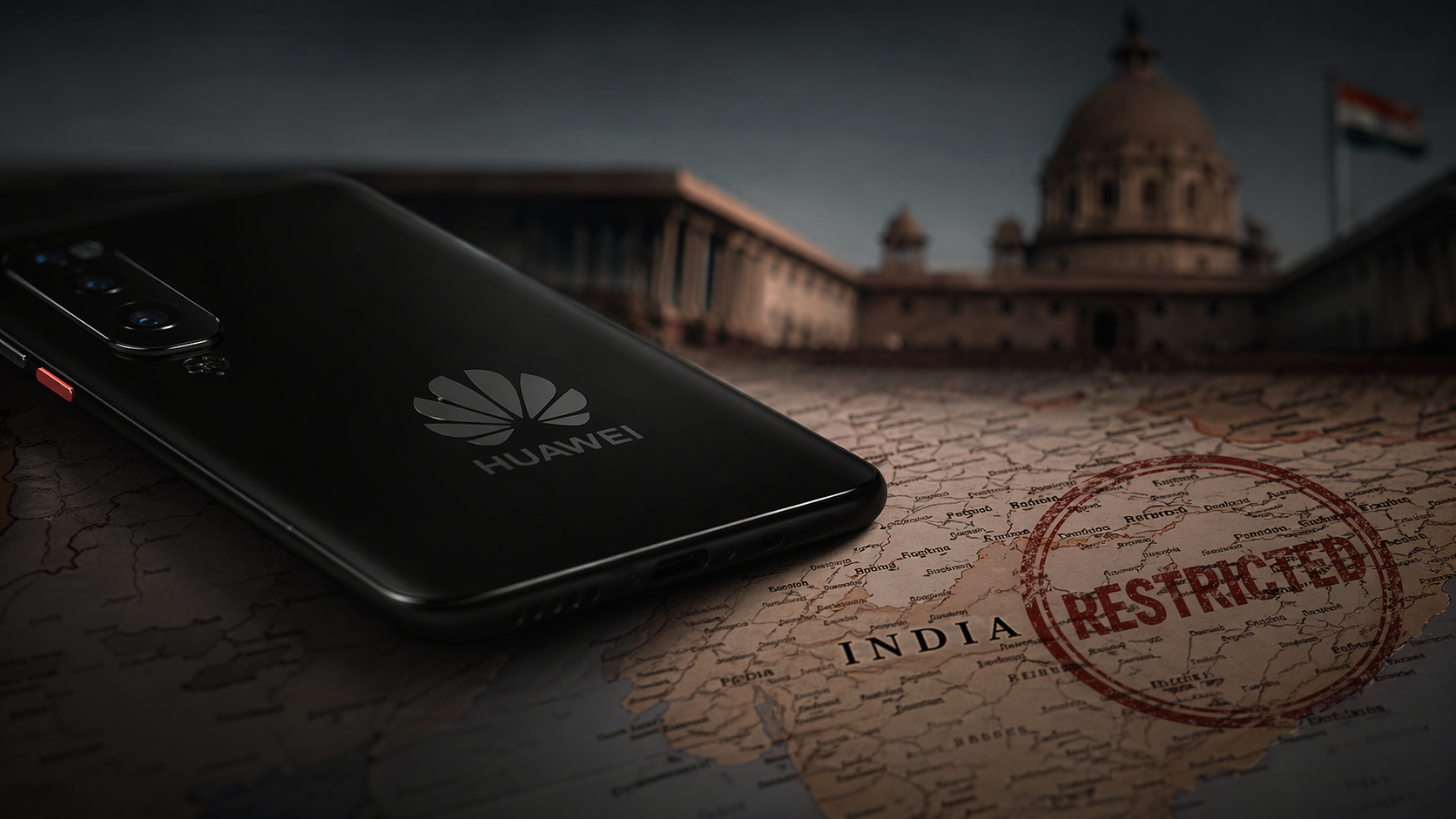
One day, Huawei was everywhere in India powering 4G networks, pitching 5G deals, running R&D labs, and selling smartphones. Then quietly it wasn’t.
No dramatic press conference. No formal government order splashed across headlines. No official “Huawei India ban” notification. Yet, today, Huawei has virtually no role in India’s telecom future. Its staff was downsized. Its 5G dreams were crushed. And its equipment is being gradually ripped out of the very networks it helped build.
So what actually happened? Is Huawei banned in India or did it just disappear?
This is the story of a silent ban that India never officially called a ban.
How Big Was Huawei in India Before All This?
To understand the scale of the exit, you first need to understand just how deeply Huawei had embedded itself into India’s telecom story.
Huawei entered India back in 1999, setting up its largest overseas R&D centre in Bangalore. For two decades, it quietly became one of the most important infrastructure players in the country. When Indian telecom giants like Bharti Airtel and Vodafone Idea were rolling out 2G, 3G, and then 4G networks, Huawei was right there selling gear that was cheaper, faster to deploy, and technically impressive.
The company wasn’t just selling equipment. It was offering long-term payment schemes and attractive credit lines to an industry drowning in debt. For telecom operators struggling with a combined debt of over ₹7.7 lakh crore, turning down Huawei’s deals wasn’t easy.
By 2018, Airtel had even conducted India’s first 5G network trial using Huawei equipment.
Huawei was, for all practical purposes, part of India’s telecom DNA.
So, Is Huawei Actually Banned in India?
The truth that most headlines miss: India never issued a formal, explicit ban on Huawei.
Unlike the United States which placed Huawei on its Entity List in 2019 and legally restricted American companies from doing business with it India took a very different, more indirect route. There was no gazette notification. No law. No press release declaring Huawei a national security threat.
What India did instead was far more strategic: it built a system that effectively made it impossible for Huawei to participate without ever having to say so out loud.
That’s the difference between a hard ban and a soft exclusion.
The "Trusted Sources" Policy: The Elegant Shutdown
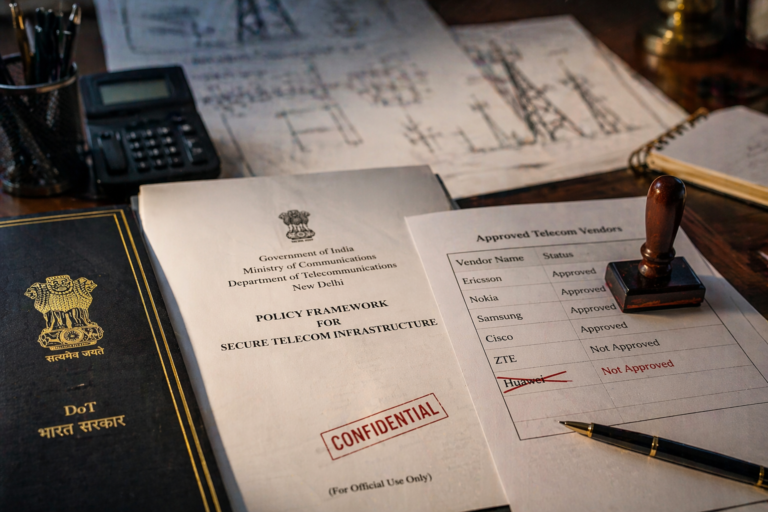
In 2021, India’s Department of Telecommunications (DoT) introduced what would become Huawei’s real death sentence in the country the “Trusted Sources” framework.
Under this policy, telecom operators in India could only buy network equipment from vendors that had received prior approval from the government. The mandate was simple on paper: if you’re not on the trusted list, you’re out.
Huawei and ZTE both Chinese companies were never added to that trusted list. The government didn’t need to say why publicly. The structure spoke for itself.
This is how India executed what analysts began calling the “Huawei India restrictions” not through a loud declaration, but through quiet bureaucratic architecture.
Operators were also instructed to phase out existing Chinese gear from their networks. Finland’s Nokia, for example, reportedly began replacing Huawei equipment in Vodafone Idea’s network.
The Galwan Valley Moment: When Everything Changed
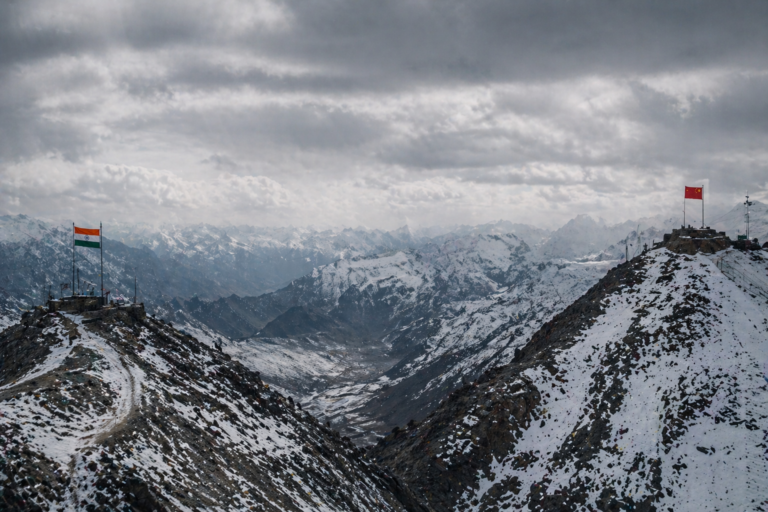
For years, India had been walking a tightrope resisting US pressure to ban Huawei while quietly conducting security reviews. In December 2019, India’s Communications Minister had even announced that Huawei could participate in 5G trials.
Then came June 2020. Indian and Chinese soldiers clashed violently in the Galwan Valley in Ladakh, resulting in casualties on both sides. It was the deadliest India-China border conflict in decades.
The political mood in India shifted overnight.
Within weeks, India banned over 260 Chinese apps including TikTok citing national security concerns. BSNL, the state-owned telecom company, was instructed not to use Chinese equipment for its 4G network upgrade. And behind closed doors, the conversation about Huawei 5G in India was effectively over.
The Galwan clash was the turning point that transformed quiet concern into active exclusion. What had been a security debate became a matter of national dignity.
Geopolitics Dressed Up as Policy: The India-China Equation
To truly understand why Huawei left India, you have to zoom out and look at the bigger picture of India-China relations.
India and China share a 3,488-km disputed border and a long history of territorial disagreements. The Doklam standoff in 2017, the Galwan Valley bloodshed in 2020, and ongoing tensions in eastern Ladakh have kept relations frosty. Against this backdrop, allowing a Chinese company to build the very nervous system of India’s communications infrastructure started looking like an extraordinary risk.
The concern wasn’t just theoretical. Security experts had long warned that Huawei equipment could contain hidden “kill switches” capabilities that could, in theory, allow the Chinese government to shut down foreign telecom networks in a conflict scenario. Huawei has consistently and strongly denied such claims. But in a geopolitical environment defined by mistrust, denial wasn’t enough.
India also deepened its technology partnerships with the US, Australia, and the EU through frameworks like the Quad. The more India integrated with Western allies who had already banned Huawei the harder it became to keep the door open for the Chinese tech giant.
The Business Impact: A Slow Bleed
The Huawei India restrictions hit the company hard, and the financial wounds were visible!
Huawei was forced to significantly downsize its India workforce in July 2020 a stark signal of how quickly its fortunes had reversed. A company that once employed thousands of engineers at its Bangalore R&D hub began scaling back operations.
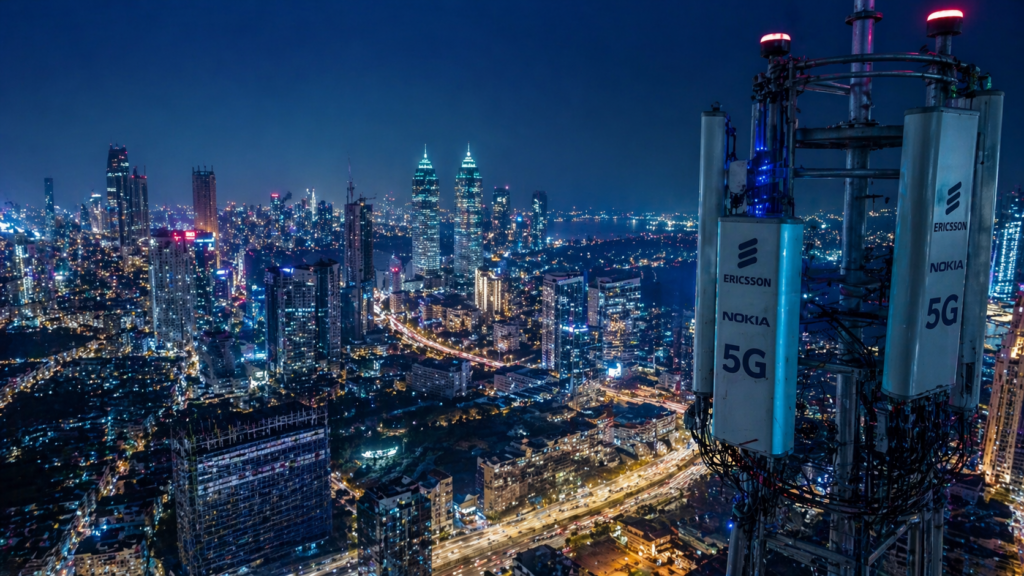
The 5G exclusion was perhaps the biggest blow. India’s 5G spectrum auction took place in 2022, and when networks began rolling out, Huawei was nowhere in the picture. Reliance Jio India’s largest telecom operator had famously built its entire network without a single Chinese component. Airtel and Vodafone Idea went with Nokia and Ericsson for their 5G buildouts.
For context, the Huawei 5G ban in India came at a brutal time for the company globally. The US had already cut off its access to advanced semiconductors. Revenue was falling. Losing India one of the world’s fastest-growing telecom markets with 1.2 billion mobile connections was a wound that couldn’t be easily absorbed.
The irony? Indian telecom operators paid the price too. Switching from Huawei to European vendors like Nokia and Ericsson increased infrastructure costs by an estimated 25–35%, according to analysts. But the government had decided that national security was worth the premium.
5G Security Concerns: The Real or Perceived Threat?
The global debate around 5G security risks and Chinese vendors is complex and India's decision sits firmly within it!
The core anxiety is this: under China’s National Intelligence Law of 2017, Chinese companies can be compelled to cooperate with state intelligence agencies. This means that, in theory, a Chinese vendor operating in a foreign country’s critical telecom infrastructure could be obligated to assist Chinese intelligence if asked.
Huawei has argued repeatedly that it is an independent, employee-owned company and that it would “never” comply with such requests. But here’s the strategic problem the law exists, and no foreign government can audit its enforcement.
For India, a country that has fought two major border standoffs with China in recent memory, this isn’t an abstract debate. Telecom infrastructure is national security infrastructure. Letting a potentially state-linked foreign actor anywhere near it especially one from a hostile neighbor was increasingly seen as untenable.
Can Huawei Make a Comeback in India?
The question everyone in the industry quietly asks. And the honest answer is: extremely unlikely in the near future!
Here’s why:
The trusted sources telecom India framework is now institutionalized. The DoT’s approval process is a structural barrier that won’t disappear overnight. Even if India-China relations improve which they have shown faint signs of doing diplomatically the national security architecture that pushed Huawei out is now a permanent feature of Indian telecom policy.
India has also invested significantly in building indigenous telecom capability. Reliance Jio, Tata Consultancy Services, Tejas Networks, and government bodies like C-DoT have all been developing homegrown 5G tech stacks. This “Atmanirbhar Bharat” (self-reliant India) push in telecom means there’s even less appetite to bring back foreign especially Chinese vendors.
For Huawei, the window that existed between 2018 and 2020 is firmly shut. It would take a fundamental reset of India-China geopolitics, a verifiable change in Huawei’s structural relationship with the Chinese state, and a political will in New Delhi that currently doesn’t exist.
Conclusion: The Ban That Dared Not Speak Its Name
Here is the core insight of this entire story: India banned Huawei without ever banning Huawei.
It’s a masterclass in geopolitical pragmatism. By using policy architecture the Trusted Sources framework, FDI rule amendments for border-sharing nations, exclusion from spectrum trials India achieved its security objective while avoiding a direct diplomatic confrontation with Beijing.
No official statement. No embassy summoning. Just a quiet structural shutdown that left Huawei executives holding empty pipelines and downsizing their Indian operations.
The broader lesson here goes beyond one company. It shows us that in the modern era, governments don’t always need to issue a formal ban to shut a door. Sometimes, they just make sure the key never arrives.
In a world where technology infrastructure is national security, the question of who builds your network is really a question of who do you trust with your country’s future? India made its choice quietly, deliberately, and without a single official announcement.
And sometimes, the loudest decisions are made in complete silence.
Frequently Asked Questions (FAQs)
Is Huawei officially banned in India?
No,India never issued a formal, legal ban on Huawei. Instead, the government introduced the “Trusted Sources” policy, which effectively excludes Huawei and ZTE from participating in India’s telecom network expansion without naming them explicitly.
Why did Huawei leave India?
Huawei didn’t voluntarily leave. It was systematically excluded through a combination of the Trusted Sources framework, exclusion from 5G spectrum trials, and policy changes following the India-China Galwan Valley border clash in June 2020.
Did Huawei participate in India’s 5G rollout?
No. When India’s 5G spectrum was auctioned in 2022 and networks began rolling out, Huawei was entirely absent. All major Indian telecom operators Jio, Airtel, and Vodafone Idea used non-Chinese vendors like Nokia, Ericsson, and Samsung for their 5G infrastructure.
What is India’s “Trusted Sources” telecom policy?
It is a framework introduced by India’s Department of Telecommunications (DoT) requiring telecom operators to procure network equipment only from government-approved vendors. Chinese companies like Huawei and ZTE have not been granted “trusted source” status, effectively barring them from India’s telecom ecosystem.
What triggered India’s action against Huawei?
The decisive trigger was the June 2020 Galwan Valley clash between Indian and Chinese troops. Prior to this, India had been conducting security reviews of Huawei. The border conflict hardened India’s stance rapidly, leading to app bans, equipment restrictions, and the ultimate exclusion of Chinese vendors from 5G infrastructure.
Can Huawei return to India?
In the current geopolitical environment, a return is highly unlikely. The Trusted Sources policy is entrenched, India is building domestic telecom capabilities, and India-China relations remain tense. A full reversal would require significant changes in both bilateral relations and Huawei’s governance structure.
How did Huawei’s exit affect Indian telecom companies?
The shift away from Huawei increased infrastructure costs for operators by an estimated 25–35%, as European vendors Nokia and Ericsson charge higher prices. However, Reliance Jio which never used Chinese equipment was unaffected and actually gained a competitive edge in the transition.
Is Huawei banned in other countries too?
Yes. The United States, United Kingdom, Australia, Canada, and Sweden are among countries that have formally banned or severely restricted Huawei from their 5G networks. India’s approach was less formal but achieved a similar outcome.
“Subscribe to mydecodeletter for weekly decodes”