
A few years ago, I was craving tea at 11 PM. My pantry was empty no milk, no sugar, nothing. I opened a delivery app expecting a 45-minute wait, but instead, the app delivered everything in 8 minutes. Eight. Minutes. That app was Zepto. And that tiny moment made me a loyal customer for life.
That is the power of a perfectly executed brand strategy. It does not just sell a product it creates memories. The Zepto brand strategy has done exactly that for millions of Indians. Built by two 19-year-old Stanford dropouts, Aadit Palicha and Kaivalya Vohra, Zepto became one of India’s fastest-growing startups turning the chaotic world of quick commerce into a well-oiled brand machine.
So what did they do differently? In this post, you will get a full breakdown of the Zepto brand strategy from their positioning and identity to their growth tactics and what other startups can copy from their playbook.

Table of Contents
What Exactly Is Zepto?
Zepto is a quick-commerce (q-commerce) startup based in Mumbai, India. It promises grocery delivery in 10 minutes and actually delivers on that promise. Founded in 2021, Zepto raised over $1.4 billion in funding by 2024, according to Forbes India.
Unlike traditional delivery apps that rely on restaurant or store partners, Zepto built a network of dark stores small fulfilment warehouses hidden in residential areas. These dark stores are the secret weapon behind their legendary speed. No showroom. No walk-in customers. Just fast delivery.
But speed alone does not build a billion-dollar brand. There had to be something more going on. And there was.

Zepto Brand Strategy: The Core Positioning
Here is the thing Zepto did not try to be everything to everyone. They picked one lane: “Fastest grocery delivery in India.” That is it. Clean, simple, ownable.
This kind of laser-focused positioning is rare. Most Indian startups try to offer 50 things and end up being remembered for none. Zepto decided the single most important thing was speed and they built their entire brand identity around it.
"If you can't explain your startup in one sentence, your brand strategy needs more work." That is the Zepto philosophy in practice.
The 3 Pillars of Zepto's Brand Strategy
- Promise of Speed — 10 minutes became the brand’s heartbeat. Every ad, every message, every social post reinforced it.
- Trust & Reliability — Consistent delivery times trained customers to depend on Zepto the same way they depend on electricity.
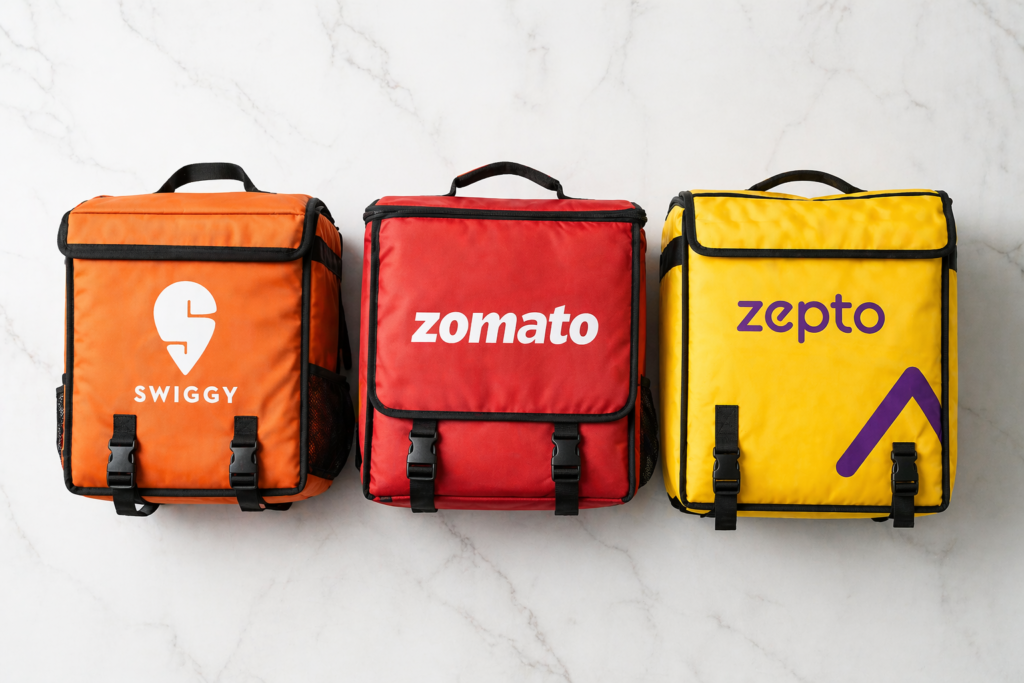
- Youthful, Bold Energy — From their bright yellow brand color to their founders’ public persona, Zepto oozes youthful confidence.
This three-pillar system meant that every department product, marketing, operations was working toward the same north star. That alignment is incredibly rare and incredibly powerful.
Visual Identity & Messaging That Hits Hard
Zepto’s branding is not accidental. Every design choice reflects their core strategy. Their yellow and black color palette is one of the boldest in Indian startups. Yellow signals speed, energy, and optimism. Black adds premium sharpness. It is the same psychology that drives brands like DHL and IKEA.
Their messaging language is also sharp. No corporate jargon. No over-explanation. Just clean, direct communication that respects the user’s time which is ironic for a brand that is literally obsessed with time.
On social media, Zepto consistently uses meme-style content that resonates with Gen-Z and millennial audiences. They do not take themselves too seriously, and that authenticity builds enormous trust. According to Wikipedia’s overview of Zepto, the company has focused heavily on urban youth as their core demographic and every content decision reflects that.
How Zepto Compares to Its Rivals
Quick commerce is a crowded space. Blinkit, Swiggy Instamart, and BigBasket Now are all fighting for the same grocery bag. So how does the Zepto brand strategy stack up against the competition?
| Feature | Zepto | Blinkit | Swiggy Instamart | BigBasket Now |
|---|---|---|---|---|
| Delivery Promise | 10 minutes | 10–15 min | 15–20 min | 30 min |
| Dark Store Network | Extensive | Extensive | Moderate | Limited |
| Youth-Focused Branding | Strong | Moderate | Moderate | Weak |
| Social Media Presence | Very Active | Active | Moderate | Minimal |
| Independent App | Yes | Yes (Zomato-owned) | No (inside Swiggy) | Yes |
| Founder Visibility | Very High | Moderate | Low | Low |
The table makes one thing obvious Zepto’s strongest advantage is not just speed. It is brand clarity. They know who they are and are not afraid to show it.
Pros & Cons of the Zepto Brand Model
✓ PROS
- Hyper-clear brand promise (10-min delivery)
- Strong youth appeal through bold visual identity
- Founder-led brand storytelling builds trust
- Dark store model enables consistent speed
- Aggressive but smart city-first expansion
- Meme-native social media presence
✗ CONS
- Heavily dependent on urban, tech-savvy users
- High burn rate for maintaining dark stores
- Profitability still a challenge at scale
- Limited product range vs supermarkets
- Intense competition from Blinkit & Instamart
5 Proven Lessons From the Zepto Brand Strategy
Whether you are building a startup or rebranding an existing business, here are the must-know lessons from Zepto's playbook:
- Own One Powerful Promise. Zepto picked “10 minutes.” Every brand needs that one thing it is known for — and fights for.
- Let Your Founders Be the Brand. Aadit Palicha’s media appearances, interviews, and tweets made Zepto feel human. Faceless brands are forgettable.
- Design for Your Audience, Not Your Ego. Yellow and black are young, bold colors. Zepto did not design for investors — they designed for 22-year-old users.
- Build Operations Into the Brand. The dark store network is not just a logistics play — it is a brand promise fulfillment engine. Infrastructure and branding must align.
- Win on Social Before Winning on TV. Zepto’s meme game and social presence built massive word-of-mouth before expensive media campaigns.
How to Apply Zepto's Brand Strategy to Your Startup
You do not need a billion dollars to use what Zepto knows. Here is a practical, step-by-step guide to applying their brand strategy principles to your own startup or small business:
Find Your “10-Minute” Promise
What one thing can you do faster, cheaper, or better than anyone else? Narrow it down to a single sentence. If it takes a paragraph, it is not sharp enough yet.
Choose Bold, Intentional Colors
Pick a color palette that speaks to your audience’s emotions not what you personally like. Study brands your target users already love.
Build a Founder-Visible Brand
Put your face on your brand. Share your journey on LinkedIn, Twitter, or Instagram. Authenticity converts better than any ad campaign.
Win Locally First
Pick one city or neighborhood and dominate it completely before expanding. Local density creates word-of-mouth. Word-of-mouth is free marketing.
Show Up Daily on Social Media
You do not need big budgets. You need consistency. Memes, behind-the-scenes clips, and real customer stories work better than polished ads.
Want to learn more about how modern Indian startups are cracking brand growth? Explore in-depth marketing and strategy guides at NextGenDecode.in

Zepto did not just build a delivery startup. They built a trusted brand promise backed by smart operations, bold design choices, and founder-led storytelling. Their brand strategy is a masterclass in focus doing one thing brilliantly instead of ten things average.
If you take nothing else from this post, take this: great brands are built on clarity, not complexity. Find your 10-minute promise. Then execute it relentlessly.