
Table of Contents
Why Sustainable Fashion Manufacturing India Matters
India doesn’t just manufacture clothes. India shapes global fashion trends. With 45 million workers in textiles and $39 billion in annual apparel exports, India is already the world’s second-largest clothing exporter.
But here’s what’s changing: The world doesn’t want cheap anymore. The world wants clean.
Sustainable fashion manufacturing India has shifted from niche opportunity to massive market necessity. Global apparel brands face unprecedented pressure from consumers, regulators, and investors demanding ethical sourcing. Fast fashion is dying. Conscious consumption is rising. And India is perfectly positioned to lead this transition.
Why? India has the infrastructure, labor force, and textile expertise that competitors lack. But more importantly, India has the opportunity to build sustainable fashion manufacturing from the ground up—learning from the West’s mistakes before making them.
For startups and manufacturers, sustainable fashion manufacturing India represents the biggest wealth-creation opportunity of the decade. This blog reveals five strategies already working for successful founders and the practical steps to capitalize on this trend.
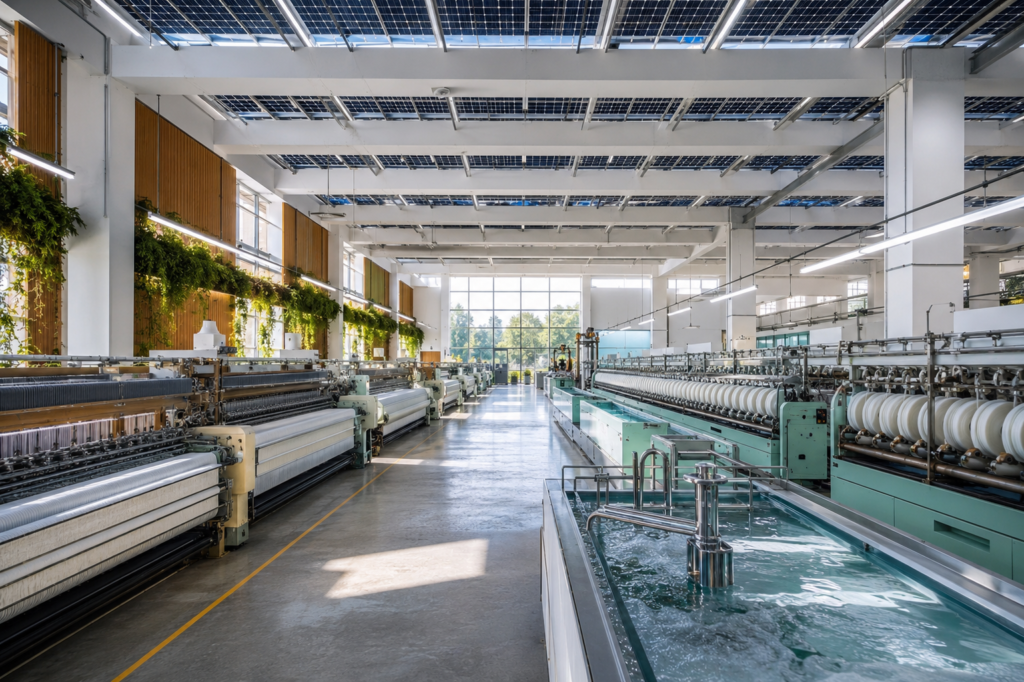
The Global Opportunity for India's Fashion Industry
The numbers are impossible to ignore. The global sustainable fashion market will hit $12.6 trillion by 2030. That’s a 10x expansion from today. And India controls 7% of this growing market a percentage that’s climbing every quarter.
Here’s what’s driving this: Western brands face a crisis. They’ve built supply chains around cheap labor and environmental corners. Consumers and governments now demand accountability. Brands like Patagonia, Reformation, and Everlane spend years finding manufacturing partners aligned with their values.
That’s India’s golden ticket.
Market Size and Growth Potential
India’s apparel industry currently generates $18.5 billion annually in exports. But sustainable fashion represents only 3-5% of production today. That gap? It’s the opportunity.
Conservative estimates suggest sustainable fashion manufacturing India will grow at 22% annually for the next five years. This means the market could expand from $600 million to $1.8 billion by 2029. For startups and manufacturers entering this space now, first-mover advantage translates to market dominance later.
Consider the labor economics: An Indian garment worker earns $3-5 daily. Western manufacturers pay $15-25. Yet sustainable practices require higher investment in equipment and training, not labor cuts. This creates a unique position: India offers Western quality with developing-nation cost advantages a combination competitors simply can’t match.
Why Brands Are Choosing India
International fashion brands aren’t choosing India for price anymore. They’re choosing India for reliability and scale combined with commitment to sustainability. The equation is simple:
Patagonia needed 50,000 units of sustainable cotton apparel annually. Indonesia couldn’t guarantee quality consistency. Vietnam’s environmental regulations were unclear. India offered proven supply chain infrastructure plus 200+ certified sustainable textile facilities.
Bangladesh discovered similar dynamics. With just 60 certified eco-factories, Bangladesh maxed out capacity. Brands then turned to India which has resources to scale sustainably without cutting environmental corners.
This pattern repeats across brands. Reformation sources 40% of production from India now. Swedish brand Ganni increased Indian orders 300% since 2021. These shifts indicate a permanent market transition, not temporary trends.
Understanding Sustainable Fashion Manufacturing in India
“Sustainable” means different things in different contexts. For manufacturing, it means addressing three core challenges simultaneously: environmental impact, social responsibility, and economic viability.
Sustainable fashion manufacturing India operates within this framework:
Current Sustainable Practices in Indian Fashion
India’s leading sustainable textile manufacturers have implemented measurable, verified practices:
Water Management: Traditional dyeing consumes 200 liters per kilogram of fabric. Sustainable facilities use closed-loop systems reducing consumption to 20 liters. Brands like Tencel and Lenzing already operate in Tamil Nadu using regenerative technology.
Organic Cotton: Maharashtra produces 60% of India’s organic cotton. Facilities using certified organic inputs eliminate synthetic pesticide runoff that historically contaminated water systems. Certified facilities pay farmers 15-30% premiums, creating economic incentive alignment.
Chemical Safety: Regulated facilities substitute toxic heavy metals with plant-based dyes and mineral pigments. This removes carcinogens from worker exposure and prevents soil contamination.
Renewable Energy: Leading manufacturers operate 40-60% of production on solar power. India’s solar costs ($40/megawatt) make renewable investment economically rational, not just environmentally necessary.
The proof exists: Facilities implementing these practices report 8-12% cost reductions after the first three years due to water savings, waste reduction, and energy efficiency. Sustainability isn’t a cost burden it’s operational optimization.
Technology and Innovation Adoption
India’s sustainable fashion manufacturing is attracting technological investment. Startups building solutions for Indian manufacturers are getting funded:
Textile Tech Startups: Companies like Weavesmart use AI to optimize dyeing recipes, reducing chemical usage 40%. Investors see massive scaling potential given India’s 10,000+ dye facilities.
Blockchain Supply Chain: Brands demand traceability. Indian startups building blockchain-based supply chain systems for textile tracking are raising millions. These systems prove ethical sourcing to consumers, justifying 15-30% price premiums.
Lab-Grown Materials: Indian research institutions are developing bacteria-based fabrics requiring 90% less water than conventional textiles. Early facilities will operate in India, creating manufacturing advantage.

Key Barriers and Solutions in Indian Fashion
No opportunity exists without friction. Understanding barriers separating successful founders from failing ones is critical.
Supply Chain Challenges
India’s textile infrastructure was built for volume, not transparency. Tracing materials from farm to finished garment required manual effort making ethical claims difficult to verify. Three solutions now address this:
First: Blockchain integration. Companies like SourceTrace and others create digital records at each stage. Initial setup costs $40,000-60,000. Ongoing costs: minimal. Brands pay premium rates because verified sustainability justifies premium pricing.
Second: Geographic clustering. Tamil Nadu, Maharashtra, and Gujarat have established eco-textile zones with shared certification infrastructure. New entrants benefit from existing certification rather than building independently.
Third: Certification partnerships. Working with established certifiers (GOTS, OEKO-TEX, Fair Trade) removes custom verification needs. Certification cost: $5,000-15,000 annually. Justifiable when accessing premium markets paying 20%+ premiums.
Successful sustainable fashion manufacturing India operations solved this by choosing one solution and scaling, not attempting all simultaneously.
Real Leaders vs Emerging Players: A Comparison
This comparison reveals why some manufacturers capture market momentum while others remain invisible.
| Factor | Established Leaders | Emerging Startups |
|---|---|---|
| Certifications | 3-5 verified certifications (GOTS, Fair Trade, OEKO-TEX) | 0-2 certifications, building credibility |
| Production Capacity | 5,000-50,000 units monthly | 500-2,000 units monthly |
| International Clients | 10-50+ verified brand partnerships | 1-5 clients, mostly local or early-stage brands |
| Water Consumption | 20-40 liters per kg (90% reduction from baseline) | 50-80 liters per kg (moderate improvement) |
| Worker Wages | 20-30% above minimum wage + benefits | At minimum wage, scaling benefits as demand grows |
| Lead Time | 45-60 days | 60-90 days due to smaller batch optimization |
| Cost per Unit | $4-7 (competitive with conventional, sustainable premium absorbed by buyers) | $5-9 (building efficiency to match leader pricing) |
| Funding | Self-funded or impact investment | Bootstrapped, seeking Angel investors |
Pros and Cons Table Format:
| Pros | Cons |
|---|---|
| Established leaders have verified certifications trusted by global brands | Early-stage startups must invest heavily in certifications before scaling revenue |
| Large production capacity means economies of scale and competitive pricing | Emerging players struggle with MOQs (minimum order quantities) for efficiency |
| International brand partnerships provide revenue stability and referrals | New entrants must build reputation through slow client acquisition |
| Advanced technology and waste reduction systems already operational | Startups require capital investment in sustainable equipment before profitability |
| Worker benefits and higher wages attract skilled labor, reducing turnover | Young operations can’t yet afford premium wages while building foundation |
Pros (Detailed Bullets):
- Proven Track Record: Established sustainable fashion manufacturing India operations have 5-10 years verifying their environmental claims. This track record justifies premium pricing and attracts cautious international brands seeking risk mitigation.
- Certification Advantage: Multiple verified certifications (GOTS, Fair Trade, OEKO-TEX) eliminate buyer verification costs. Brands can immediately market products as certified sustainable, accelerating time-to-market.
- Economies of Scale: 10,000+ monthly units mean per-unit costs drop 30-50% versus small producers. This efficiency allows competitive pricing while maintaining sustainable practices and worker benefits.
- Supply Chain Maturity: Established facilities have supplier relationships, logistics partnerships, and quality control systems already optimized. This reduces production risk and delivery delays that plague newer entrants.
Cons (Detailed Bullets):
- High Entry Barriers: Becoming a certified sustainable fashion manufacturer India requires $50,000-150,000 initial capital just for certifications and sustainable equipment. Bootstrapped startups struggle with this requirement.
- Capacity Constraints: Market demand growing faster than production capacity. Leading facilities maxed at 50,000 monthly units facing 100,000+ unit inquiries. This creates opportunity for new entrants to capture unmet demand.
- Pricing Pressure: As more manufacturers become sustainable, pricing competition increases. Established players risk margin compression if they don’t innovate beyond baseline certifications.
- Scaling Challenges: Moving from startup to established manufacturer requires systems, capital, and talent management that founders often lack. Many promising operations stall at 2,000-5,000 monthly units.
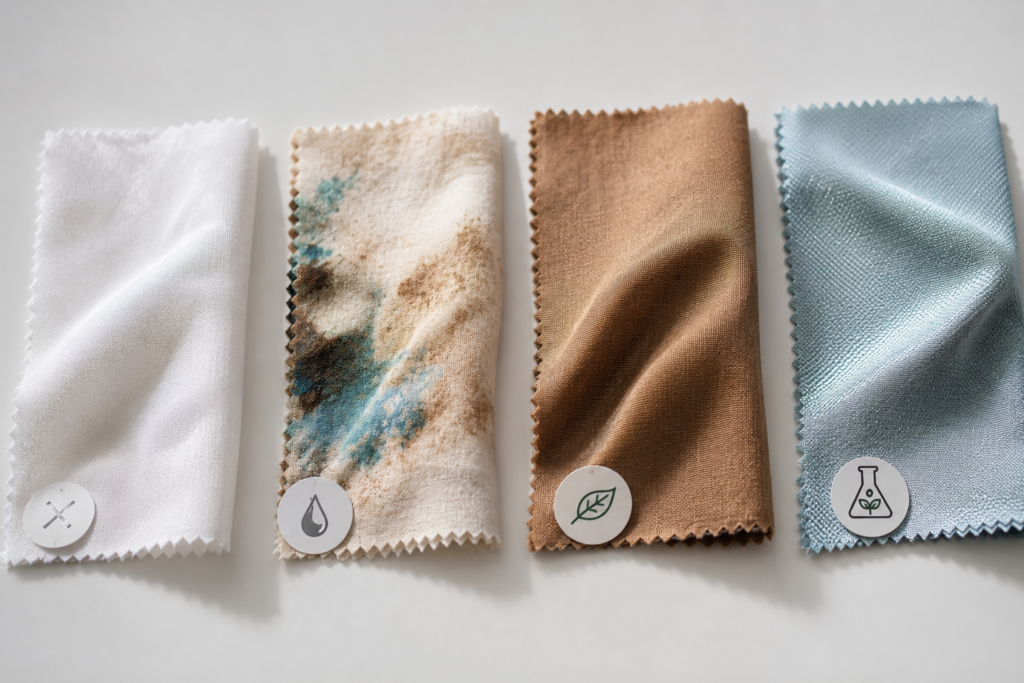
Startup Opportunities in Sustainable Fashion Manufacturing
Five specific opportunities exist for founders launching sustainable fashion operations in India right now.
Fabric Innovation Opportunities
Sustainable fashion manufacturing India desperately needs new textile solutions. Global brands can’t achieve sustainability goals using conventional fabrics. This creates opportunity.
Bacteria-Based Fabrics: Research institutions in Bangalore and Delhi are developing materials using genetically engineered bacteria producing cellulose. Commercial viability launches in 24-36 months. First manufacturers operating this technology gain 18-24 month advantage before competitors catch up.
Agricultural Waste Utilization: Farmers burn agricultural residue (rice straw, cotton stalks, sugarcane bagasse) creating air pollution. Converting this waste into fiber creates dual-value: solves pollution while providing free raw materials. Several startups building pilot programs.
Seaweed and Ocean Materials: India’s coastal regions have opportunity to create marine-based textiles. Brands like Patagonia actively seek ocean-friendly alternatives. Coastal startups developing seaweed-to-textile processes have zero competition in India currently.
Investment needed: $200,000-500,000 for R&D and pilot production. Revenue timeline: 24-36 months. Potential market size: $100+ million annually once scaled.
Direct-to-Consumer Fashion Models
Rather than manufacturing for Western brands, startups can build direct-to-consumer sustainable fashion brands operating from India with global reach.
This model works because:
- Sustainable fashion commands 25-40% retail price premium
- Manufacturing cost advantages (70% lower than Western production) create massive margins
- Growing global consumer base values transparency and Indian heritage craftsmanship
Successful examples like Nicobar (heritage + sustainability) prove this works. They started with artisan partnerships and sustainable practices, built brand in India, then went global.
Capital Required: $50,000-100,000 to start small batch production + digital marketing Timeline to Profitability: 18-24 months Margin Potential: 60-70% gross margins on premium sustainable apparel
How to Start a Sustainable Fashion Business in India
If you’re launching sustainable fashion manufacturing in India, follow this sequence:
Step 1: Identify Your Niche
Don’t build “sustainable fashion.” That’s too broad. Build for a specific segment:
- Sustainable activewear for conscious athletes
- Luxury heritage clothing using traditional techniques
- B2B supply for existing sustainable brands
- Specific material innovation (organic cotton, lab-grown fabrics, etc.)
Narrowing focus helps you become best-in-category rather than okay at everything. It also attracts investors and buyers more effectively.
Step 2: Build Supplier Relationships
Before manufacturing anything, map your supply chain:
- Which farms provide raw materials?
- Which dye facilities use sustainable processes?
- Which logistics partners understand eco-packaging?
- Which certifiers will verify your claims?
Document everything. Transparency is your market advantage.
Step 3: Start Small, Certify Fast
Minimum order quantities range from 500-2,000 units depending on fabric type. Start at this level while pursuing certifications simultaneously.
Budget: $10,000-15,000 for initial production. $5,000-10,000 for certifications. Total startup: $30,000-50,000 including branding and marketing.
Certifications to pursue (in order):
- GOTS (Global Organic Textile Standard)—most recognized
- Fair Trade Certified (if you want worker focus)
- OEKO-TEX (if you target health-conscious consumers)
Step 4: Leverage Digital Marketing
Manufacturing is boring. Stories are compelling. Build narrative around:
- Your founder’s journey
- Specific artisans creating your clothing
- Environmental impact your business prevents
- Customer stories
Use Instagram, TikTok, and YouTube to reach global conscious consumers. Sustainable fashion audiences actively seek authentic brand stories.
For additional startup guidance and resources: https://nextgendecode.in/
Step 5: Build B2B Relationships
B2C (direct-to-consumer) takes time to scale. B2B (wholesale to boutiques, online retailers, sustainable brands) generates faster revenue.
Attend trade shows. Connect with sustainable fashion aggregators. Join platforms like TradeKey and Alibaba focused on ethical manufacturing. These channels connect you to buyers actively seeking Indian manufacturers.

Conclusion
Sustainable fashion manufacturing India isn’t coming. It’s here. Brands like Patagonia, Reformation, and emerging DTC companies are already building operations, partnerships, and investments across India’s textile regions.
The question isn’t whether India will become the sustainable fashion hub. The question is: Will you be among the founders and manufacturers capturing this opportunity?
The infrastructure exists. The talent exists. The global demand exists. What’s missing are founders willing to move fast, build transparent supply chains, and solve the specific problems preventing sustainable fashion manufacturing from scaling faster.
Five clear startup opportunities exist right now:
- Fabric innovation (bacteria-based, agricultural waste, seaweed materials)
- Direct-to-consumer premium sustainable brands
- B2B supply partnerships to established brands
- Technology solutions for supply chain tracking and optimization
- Specialized manufacturing for niche sustainable segments
Start with a specific niche. Build your supply chain transparency. Pursue certifications while serving early customers. Leverage digital marketing to tell your authentic story. Then watch your sustainable fashion manufacturing India operation scale from startup to industry leader.
The decade of sustainable fashion manufacturing is India’s to win. Make sure you’re in the game.
FAQ: Questions About India's Fashion Manufacturing Hub
1.Can India become a global sustainable fashion leader?
Absolutely. India already leads in conventional fashion. The textile infrastructure, labor force, and manufacturing expertise already exist. The transition to sustainable practices is underway with dozens of facilities certified annually. Within five years, India could capture 15-20% of global sustainable fashion manufacturing. For founders launching now, first-mover advantage is significant.
2.What certifications matter for sustainable fashion manufacturers?
GOTS (Global Organic Textile Standard) is most globally recognized. Fair Trade Certified matters if worker welfare is your story. OEKO-TEX matters for health-conscious consumers. Start with GOTS, then layer additional certifications as you scale. Most serious buyers require at least one major certification before partnering.
3.How much capital is needed to start sustainable fashion manufacturing in India?
Bootstrapped startups can launch with $30,000-50,000 covering initial production, certifications, and marketing. This funds maybe 1,000 units. To scale meaningfully (10,000+ monthly units), expect $200,000-500,000 including facility improvements and technology upgrades. Most successful founders combine personal capital with angel investment or impact investment rounds.
4.What’s the biggest risk for startups entering sustainable fashion manufacturing?
Underestimating how long certifications take and how expensive they are. Many founders assume certifications are quick add-ons. Reality: Getting GOTS certification takes 6-12 months and costs $8,000-15,000. Plan for this timeline and budget it explicitly. Second biggest risk: starting too big. Begin at 500-1,000 units, prove your process works, then scale.
5.Are there government incentives for sustainable fashion startups in India?
Yes. Production-Linked Incentive Scheme (PLI) offers 4-12% incentives for textile exports depending on product category. Various states (Tamil Nadu, Maharashtra, Gujarat) offer manufacturing subsidies and export incentives. Research state-specific programs before choosing your location. Some regions offer 10-15% manufacturing cost reductions through local incentives.