
Introduction: It's Not Just About Animals
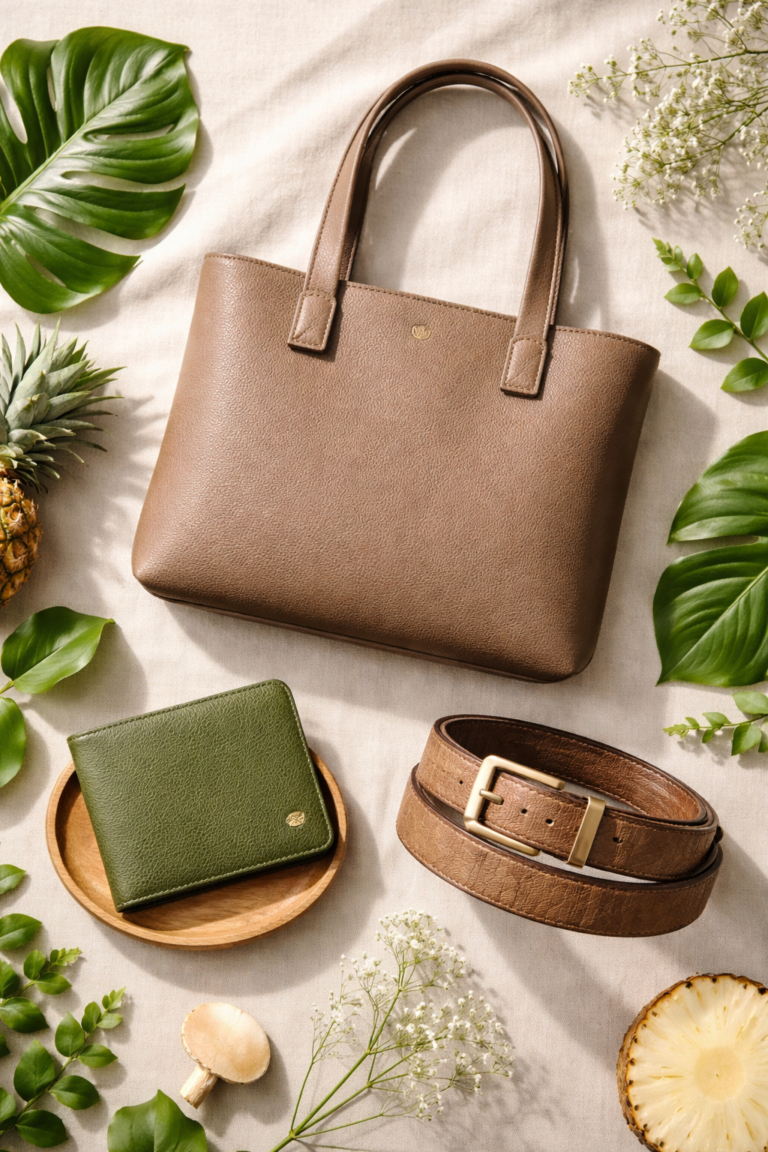
When most people hear “vegan leather,” they picture activists, Instagram aesthetics, or expensive handbags marketed to eco-conscious millennials. They think it is a niche lifestyle choice something for the few, not the many.
But that framing completely misses the point.
Vegan leather is not just a fashion preference. It is not just about animal rights, though that matters too. It is about a massive, overlooked crisis in how the world produces one of its most used materials and why the old way is quietly causing damage that most of us never see.
Society does not just benefit from vegan leather. Society needs it. And in this blog, we are going to decode exactly why from environmental data to economics to the future of fashion in countries like India.
First, Let's Talk About What Traditional Leather Actually Costs the World
Before we understand why vegan leather matters, we need to be honest about what conventional animal leather actually involves. Most people buy a leather bag or belt without ever thinking about the full supply chain behind it.
Here is the reality:
The livestock industry which produces leather as a by-product of meat is responsible for approximately 14.5% of global greenhouse gas emissions, according to the Food and Agriculture Organization of the United Nations. That is more than the entire global transportation sector combined.
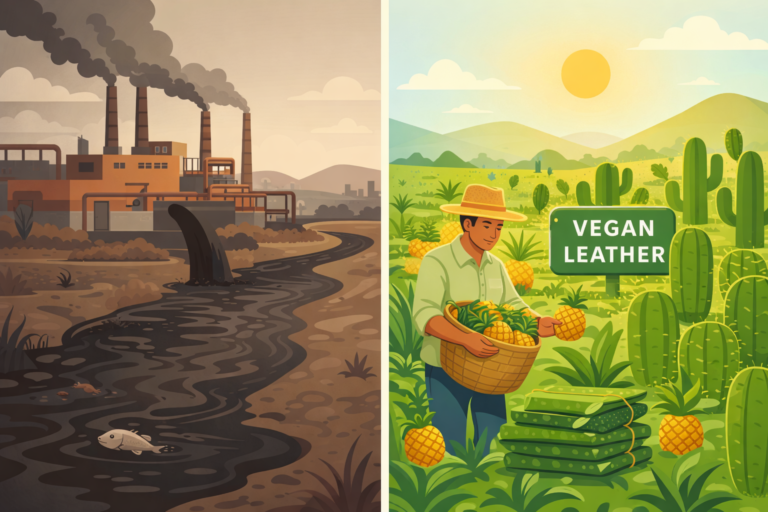
Tanneries the factories that process raw animal hides into usable leather are among the most polluting industrial facilities in the world. They use toxic chemicals like chromium, arsenic, and formaldehyde. In countries like Bangladesh, India, and China which together produce a massive share of the world’s leather tannery waste has contaminated rivers, groundwater, and soil in surrounding communities for decades.
In Kanpur, India once called the “leather capital of the world” the Ganges River near the tanning district has carried chromium levels hundreds of times above safe limits. Workers in these facilities face serious health risks. Local communities bear the cost of an industry that produces luxury goods for global consumers.
This is the hidden price of traditional leather. And society particularly the people closest to the production pays it every day.
So What Is Vegan Leather, Really?
Vegan leather is any leather-like material that does not come from animal hides. The term covers a wide and growing range of materials:
- PU Leather (Polyurethane): The most common type today. More affordable, more consistent in quality, and far less polluting to produce than animal leather.
- Piñatex: Made from pineapple leaf fibers a waste by-product of pineapple farming. Used by brands like Hugo Boss and Paul Smith.
- Mylo: Made from mycelium (mushroom roots). Developed by Bolt Threads and used by Stella McCartney.
- Apple Leather: Made from apple waste from the juice industry. Produced in Italy and used in accessories worldwide.
- Cactus Leather (Desserto): Made from nopal cactus in Mexico. Requires no irrigation, no toxic chemicals, and is partially biodegradable.
- Grape Leather: Made from the grape skin and seeds left over from Italian wine production.
These are not science fiction concepts. They are real, commercially available materials being used by real brands right now. And they are getting better, cheaper, and more scalable every single year.
Why Society Needs Vegan Leather: 5 Real Reasons
The Planet Cannot Sustain Animal Leather at Scale
The global leather goods market is expected to reach over $600 billion by 2030. That is an enormous demand for animal hides which means more livestock, more land cleared for grazing, more water used, more methane released, and more tannery pollution.
The math simply does not work in a world where climate change is already a present crisis, not a future one. We cannot keep producing leather the old way and also meet our climate commitments. Something has to change. Vegan leather is that change especially as bio-based alternatives become mainstream.
It Protects Millions of Workers in Developing Countries
This point rarely gets discussed in Western-focused vegan leather conversations, but it is critically important especially for India.
The people suffering most from traditional leather production are not wealthy consumers. They are low-income tannery workers and community members in places like Kanpur, Dhaka, and Guangzhou who have no say in the industry’s environmental practices.
A shift to cleaner, plant-based or synthetic leather production means cleaner factories, safer working conditions, and less toxic contamination of local water and land. For millions of people in the Global South, vegan leather is not an ethical luxury it is a public health issue.
It Opens Enormous Economic Opportunities
The vegan leather industry is not just good for the planet it is good for business. And this is especially relevant for India.
India is one of the world’s largest producers of fruits and agricultural products from coconuts to pineapples to bananas to sugarcane. The fibres, husks, and waste materials from these crops can be converted into bio-leather materials, creating new industries and livelihoods in rural areas.
Several Indian startups are already working in this space. Companies are experimenting with banana stem leather, coconut husk leather, and other agri-waste based materials. If India positions itself at the forefront of bio-leather innovation, it can become a global leader in sustainable materials the same way it has become a global leader in software and pharmaceuticals.
The opportunity is enormous. And it is sitting in the agricultural waste that Indian farmers currently throw away.
Consumer Values Are Changing And Fast
Gen Z and younger Millennials are the fastest-growing consumer segment globally. And studies consistently show that this generation prioritises sustainability, transparency, and ethics in their purchasing decisions.
A 2023 survey by McKinsey found that over 60% of consumers say sustainability is an important factor in their fashion purchases. Brands that continue ignoring this shift will lose relevance. Brands that lead it will build the loyalty of an entire generation.
In India, the rise of conscious consumerism is visible everywhere from the growth of organic food markets to the popularity of sustainable fashion content on YouTube and Instagram. Young Indian consumers are increasingly asking: Where did this come from? Who made it? What is it doing to the planet?
Vegan leather is one of the clearest, most visible answers a brand can give to those questions.
Technology Is Making Vegan Leather Genuinely Better Than Animal Leather
Here is something that surprises most people: newer generations of vegan leather are not just “good enough alternatives” in several measurable ways, they are superior to animal leather.
- They are more consistent in texture and thickness.
- They can be engineered to be water-resistant, UV-resistant, or anti-microbial.
- They do not crack or fade in the same way animal leather does over time.
- Bio-based options like mycelium leather can be grown in specific shapes, reducing waste in the cutting process.
- Their production emits significantly less carbon per unit than animal leather.
As material science continues to advance, the performance gap between vegan and animal leather will only continue to close and in many product categories, it is already gone.
The Pushback: Is Vegan Leather Just Plastic?
This is the most common objection, and it is worth addressing honestly.
Yes, some vegan leather particularly older PU and PVC leather is plastic-based. Plastic has its own environmental problems, including microplastic pollution and slow biodegradation.
But this critique, while valid, misses the direction of the industry. The future of vegan leather is bio-based plant-derived, biodegradable, and compostable. Mycelium leather, cactus leather, pineapple leather these are fundamentally different from plastic. They are grown, not manufactured.
The honest answer is: not all vegan leather is equal. The solution is not to return to animal leather it is to push the vegan leather industry toward its best, most sustainable forms. That requires consumer demand, industry investment, and policy support. All three are growing.
Conclusion: This Is Not a Trend. This Is a Transition.
Vegan leather is often dismissed as a trend something fashionable today that will fade tomorrow. But the evidence tells a completely different story.
The problems it addresses climate change, water pollution, worker exploitation, biodiversity loss are not going away. If anything, they are getting more urgent every year.
Society needs vegan leather not because it is trendy, but because the alternative continuing to produce fashion at the cost of the planet and the people living closest to its production is no longer acceptable.
The next generation of consumers already knows this. The brands that will survive the next 20 years know this. And now, so do you.
Vegan leather is not the future of fashion. It is the present necessity that the fashion industry is slowly, finally, waking up to.
“Subscribe to mydecodeletter for weekly decodes”