
Introduction - Is Vegan Leather the Future of Fashion in India?
A friend once walked into a leather shop in Delhi looking for a simple wallet. She came out with a vegan leather one – not because she planned to, but because the shopkeeper said, “Madam, this is better for you and the environment.” That small moment says a lot about where Indian fashion is heading.
Vegan leather in India is no longer just a Western trend. It is showing up in bags, shoes, belts, car seats, and even office furniture. More Indian buyers are asking questions – Is it real? Is it good? Will it last? This post answers all of that honestly, without the buzzword hype.
Table of Contents
Vegan Leather in India - What Exactly Is It?
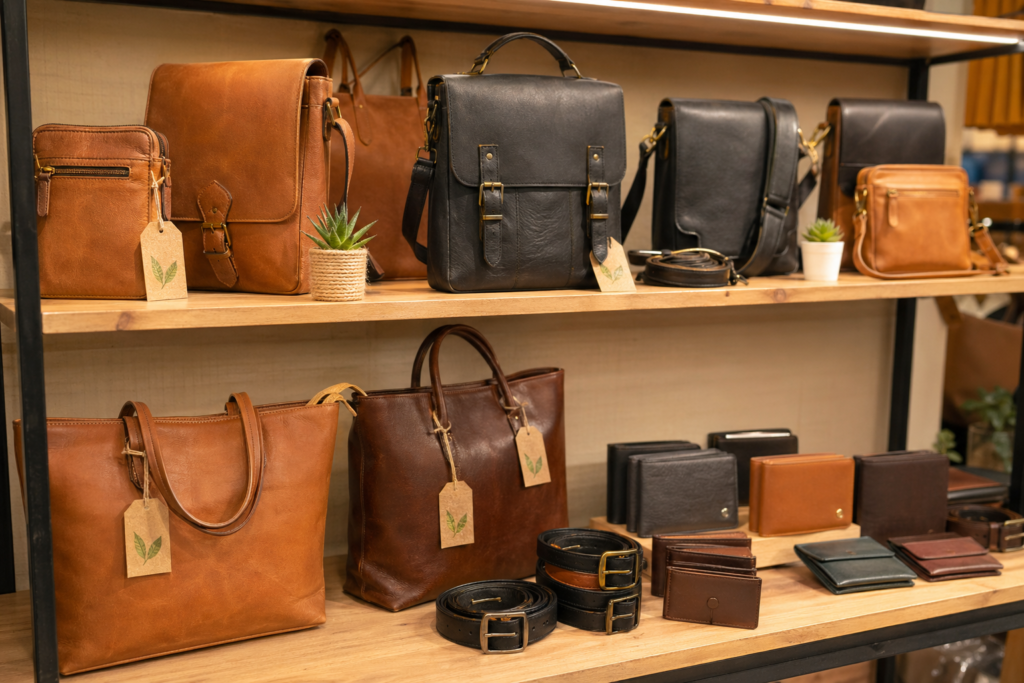
Most people hear “vegan leather” and think it’s just cheap plastic. That is a fair assumption – because for a long time, it was. But things have changed fast.
Vegan leather is any leather-like material made without using animal skin. It can be made from polyurethane (PU), PVC, or newer plant-based materials like mushrooms, pineapple leaves, and even cactus. The goal is to give you the look and feel of leather – without the animal cruelty or the heavy environmental cost of traditional tanning.
In India, the term is used loosely. Many products sold as “vegan leather” are simply PU-coated fabric. That is not necessarily bad – but it helps to know what you’re buying. The more premium segment now includes plant-based materials, which are slowly entering the Indian market through online platforms and niche boutiques.
Why Indian Consumers Are Shifting to Vegan Leather
The shift is real, and it is happening for more than one reason. Here’s what is actually driving Indian buyers toward vegan alternatives:
- Animal welfare awareness is growing fast, especially among younger urban buyers who follow global sustainability trends.
- Price sensitivity plays a huge role. Good quality PU leather products cost significantly less than genuine leather in India.
- PETA India campaigns and social media have made cruelty-free fashion a visible choice, not just a niche one. According to PETA India, millions of animals are slaughtered annually for leather – a fact that is shifting consumer mindsets.
- Growing vegan lifestyle adoption, particularly among millennials in cities like Mumbai, Bengaluru, and Pune.
- Wider availability on platforms like Myntra, Flipkart, and Meesho means more people are simply stumbling upon vegan leather options.
It is not a revolution yet. But the momentum is clear and growing every season.
Types of Vegan Leather Available in India
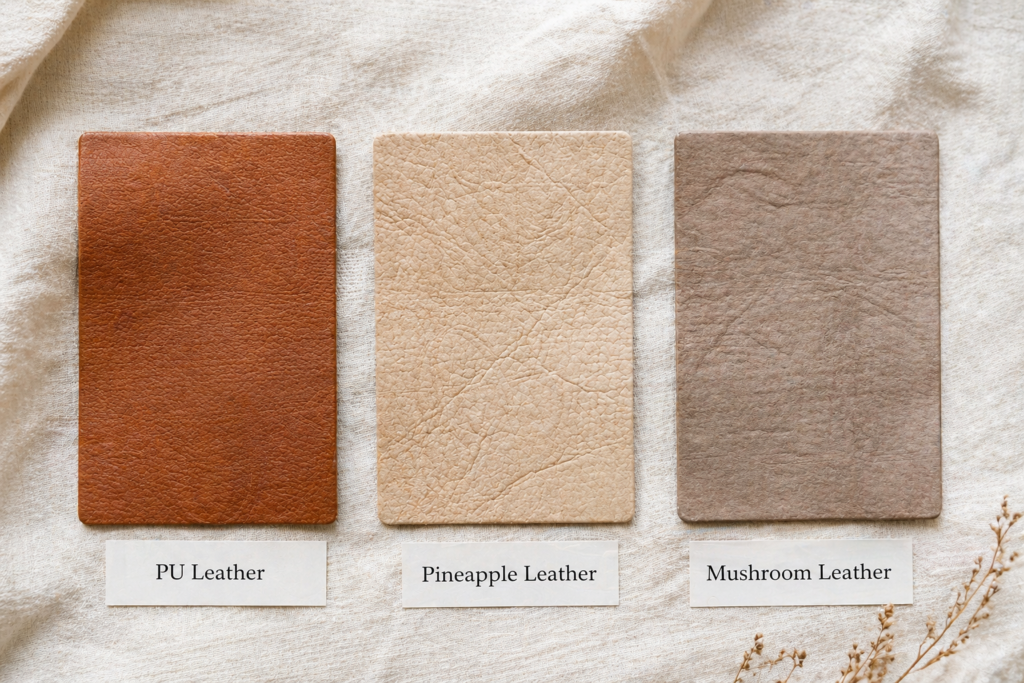
PU Leather (Polyurethane)
This is the most common type found in Indian markets. PU leather is made by coating a fabric base with a polyurethane finish. It is affordable, soft, and looks very close to real leather. Most Indian bags, wallets, and footwear labelled “vegan leather” fall into this category. It is reasonably durable but can crack after a few years, especially in dry climates.
PVC or Faux Leather
PVC leather is older and less breathable than PU. It is stiffer, harder to recycle, and not considered eco-friendly. However, it is very budget-friendly and widely used in low-cost Indian fashion accessories. If you’re buying something ultra-cheap, it is likely PVC.
Plant-Based Leathers (Mushroom, Pineapple, Cactus)
These are the exciting new category. Mushroom leather (like Mylo), pineapple leather (Pinatex), and cactus leather (Desserto) are now being explored by a small but growing number of Indian designers and brands. They are more sustainable, biodegradable, and genuinely impressive in quality. However, they remain expensive and are not yet mainstream in India.
Top Indian Brands Using Vegan Leather
Several Indian brands are leading the way in making vegan leather fashionable and accessible:
- Baggit – One of India’s most popular bag brands, fully cruelty-free since its founding.
- Caprese – Offers stylish PU leather bags at competitive prices.
- Zouk – A newer brand focused on Indian craftsmanship using sustainable, cruelty-free materials.
- Dressberry and Lavie – Mainstream brands offering affordable vegan leather handbags.
- The House of Tara – Premium segment with a focus on ethical materials.
According to Forbes India, the sustainable fashion market in India is expected to grow significantly over the next decade, and vegan leather is a key part of that story.
Vegan Leather vs Real Leather - Full Comparison
| Feature | Vegan Leather (PU) | Real Leather |
|---|---|---|
| Price | Lower (affordable) | Higher (premium) |
| Animal Cruelty | None | Yes |
| Durability | 2-5 years (average) | 10-20+ years |
| Climate Performance | Struggles in heat/humidity | Handles well |
| Eco-Friendliness | Mixed (PU not biodegradable) | Tanning is highly polluting |
| Maintenance | Easy to wipe clean | Needs conditioning |
| Appearance | Looks like leather | Ages beautifully |
| Availability in India | Very wide | Wide |
| Cost of Care | Minimal | Moderate |
| Biodegradability | Low (PU/PVC) | Yes (natural leather) |
(Note: Plant-based vegan leathers score much better on eco-friendliness and durability than PU/PVC)
Pros and Cons of Vegan Leather in India
Pros of Vegan Leather in India
- No animal harm – 100% cruelty-free and ethical choice
- More affordable – Budget-friendly options for everyday buyers
- Wide variety – Available in many colors, textures, and styles
- Easy maintenance – Simple to clean with a damp cloth
- Growing quality – Plant-based versions are closing the quality gap fast
- Widely available – Found across all major Indian e-commerce platforms
Cons of Vegan Leather in India
- Lower durability – PU leather peels and cracks faster, especially in India’s harsh climate
- Not truly eco-friendly (PU/PVC) – Most vegan leather is plastic-based and non-biodegradable
- Limited breathability – Can feel uncomfortable in hot, humid weather
- Plant-based options are expensive – Mushroom or cactus leather is still out of reach for most Indian buyers
- Quality inconsistency – The Indian market has a lot of low-quality faux leather sold under the “vegan leather” label
Practical Guide - How to Start Buying Vegan Leather in India
Ready to make the switch? Here are smart, actionable steps to buy well:
- Always check the material label – Look for “PU leather” or “polyurethane” to know what you are actually getting.
- Set a budget with quality in mind – Spend at least Rs 800-1500 for a decent PU leather wallet. Anything cheaper likely uses PVC.
- Research the brand first – Trusted brands like Baggit and Zouk are transparent about materials. Unknown brands often are not.
- Buy for indoor or occasional use first – If you’re new to vegan leather, start with items not exposed to daily sun or rain.
- Use a leather conditioner designed for PU – Yes, PU leather benefits from conditioning too. It extends its life considerably.
- Avoid direct sunlight storage – Store in a cool, dry place and use dust bags when not in use.
- Explore plant-based options online – Websites like Etsy India and curated stores carry Pinatex and mushroom leather products if you’re ready to invest more.
For more smart buying guides and sustainable lifestyle tips, visit NextGenDecode.in – your go-to resource for practical, well-researched content.

The Final Verdict on Vegan Leather in India
Here is what this post covered, honestly:
- Vegan leather in India is mostly PU-based right now – good, but not great for durability in harsh climates.
- Indian consumer awareness and demand are growing, driven by price, ethics, and style.
- Three main types exist: PU, PVC, and plant-based – each with very different quality and eco-impact.
- Indian summers and monsoons are tough on PU leather – proper care makes a big difference.
- Brands like Baggit and Zouk are proving that cruelty-free can also be high quality.
- Plant-based leathers are the real future – but they are not mainstream in India yet.
The smart move? Start with PU leather from a trusted Indian brand. Take care of it well. And as plant-based options become more affordable, make the upgrade. Vegan leather is not perfect yet – but it is getting better every year, and every purchase you make sends a message to the market.
The leather industry will follow where buyers lead. So lead wisely.
Frequently Asked Questions
Q1: Is vegan leather in India good quality?
Quality varies widely. Trusted Indian brands like Baggit and Zouk offer very decent PU leather that looks great and lasts 2-4 years with proper care. However, cheap, unbranded faux leather sold at street markets or unknown online sellers is often very poor quality. Always buy from reputable brands and check material descriptions before purchasing.
Q2: Which Indian brands sell the best vegan leather products?
Some of the best options right now include Baggit (bags and wallets), Zouk (stylish sustainable accessories), Caprese (mid-range bags), and The House of Tara (premium segment). For footwear, brands like Nell and Privo offer decent vegan leather shoe options as well.
Q3: How long does vegan leather last in India?
On average, good quality PU leather products last 2 to 5 years in Indian conditions. The main enemies are direct sunlight, high humidity, and poor storage. With regular gentle cleaning, conditioning, and proper storage away from heat, you can easily extend the life toward the upper end of that range.
Q4: Is vegan leather cheaper than real leather in India?
Yes, generally. A genuine leather bag in India typically starts at Rs 2,500 and can go up to Rs 20,000+. A comparable-looking PU leather bag from a good brand can cost between Rs 800 and Rs 3,500. The price gap is significant, which is one of the biggest reasons vegan leather is growing in popularity across Indian cities.
Q5: Will vegan leather fully replace real leather in India?
Not anytime soon – but the gap is closing. Real leather still wins on durability, breathability, and long-term aging. However, as plant-based leather technology improves and becomes more affordable, the case for making a full switch becomes stronger. Changing consumer values around animal welfare and sustainability will also push this shift faster over the next 5-10 years.