
Table of Contents
Introduction
You swipe your card for coffee, groceries, or that online purchase without thinking twice. It feels convenient. But behind every transaction, banks are quietly making money. Many people wonder how banks make money from credit cards while offering rewards and zero annual fees on some cards.
The truth might surprise you. Banks run a highly profitable machine built on interest, fees, and merchant payments. Understanding this system helps you use cards smarter instead of feeding their profits. In this post, we uncover the hidden business that powers the credit card industry.
The Real Business Model Behind Credit Cards
Credit cards are not just plastic. They represent a sophisticated lending and payment system. Banks issue cards, process transactions, and partner with networks like Visa and Mastercard.
The model works because most users carry balances or trigger fees. Even those who pay on time generate revenue through merchants. This dual income stream makes credit cards one of the most profitable products for banks.
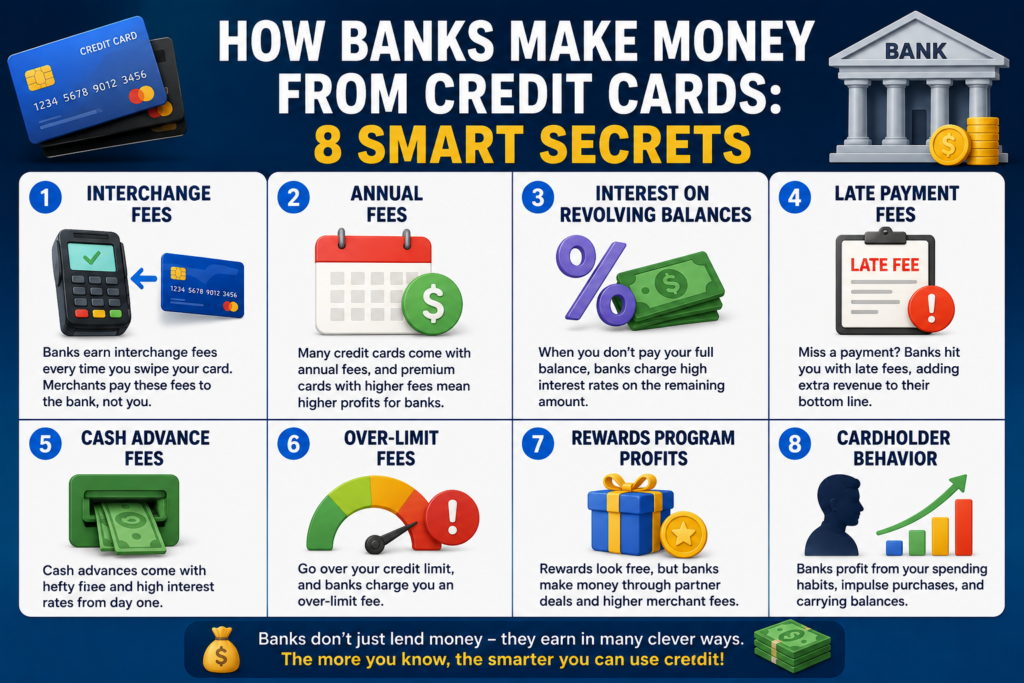
8 Ways How Banks Make Money From Credit Cards
Here are the eight powerful ways banks earn from your daily swipes.
- Why Most People Lose Money Many users pay only the minimum due. This keeps high-interest balances growing. Banks love “revolvers” people who carry debt month after month.
- Late Fees and Penalty Traps Miss your due date by even one day and you face hefty late fees plus penalty interest. These charges add up fast.
- Annual and Other Hidden Fees Some cards charge annual fees. Others have cash advance fees, balance transfer fees, or foreign transaction fees.
- Rewards Programs and Their Cost Rewards sound great but come from merchant fees and sometimes higher interest rates. Banks design programs so average users subsidize heavy reward users.
How Interchange Fees Actually Work
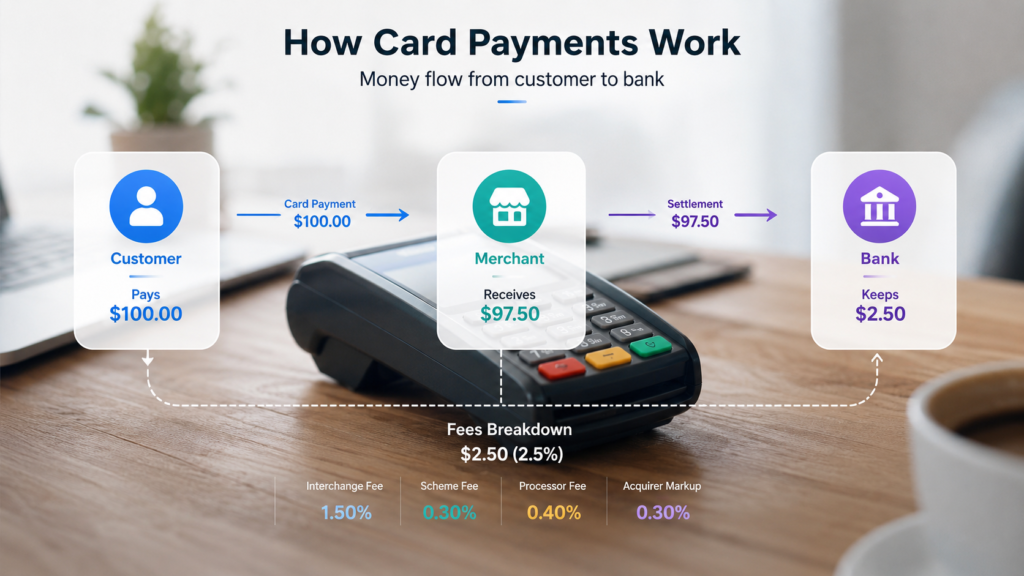
The Merchant Side of the Story When you pay with a card, the merchant pays an interchange fee (usually 1-3%). Part of this goes to your bank. This is pure profit even if you pay your bill in full.
According to NerdWallet, interchange fees form a major revenue pillar for issuers.
Interest Income: The Biggest Cash Cow
This is where banks earn the most. Interest rates often range between 36-48% annually in India. If you carry a balance, the bank earns handsomely.
Paying in full avoids this completely. But millions don’t, creating steady income for banks.
Comparison Table: Revenue Sources Breakdown
| Revenue Source | % of Bank Profit | Paid By | Avoidable? |
|---|---|---|---|
| Interest Charges | 60-70% | Cardholders | Yes |
| Interchange Fees | 15-25% | Merchants | No |
| Late & Penalty Fees | 8-12% | Cardholders | Yes |
| Annual & Other Fees | 5-10% | Cardholders | Sometimes |
This table shows why banks push credit limits and easy approvals.
Pros and Cons of Using Credit Cards
Pros
• Builds credit score when used responsibly
• Offers purchase protection and rewards
• Convenient for emergencies and online shopping
• Helps track expenses easily
Cons
• High interest if balance carried
• Encourages overspending
• Various hidden fees can add up
• Risk of debt trap for undisciplined users
Practical Guide: How To Use Credit Cards Wisely
Follow these steps to stay ahead:
Step 1: Always Pay in Full every month to avoid interest.
Step 2: Track Your Spending using apps or bank statements.
Step 3: Choose the Right Card that matches your lifestyle and spending habits.
For more tools and resources, check out NextGenDecode.in.
According to Investopedia, understanding these mechanics helps consumers make better financial decisions.

Conclusion
Now you know how banks make money from credit cards. The system rewards discipline. Pay on time, use rewards strategically, and treat credit as a tool rather than free money.
Start tracking one card this month. Small changes create big savings over time. Your wallet will thank you.

FAQ Section
What are interchange fees?
Interchange fees are charges merchants pay to banks for every card transaction. Banks receive a share without you noticing.
Do all credit cards charge interest?
Yes, but only if you carry a balance. Paying in full every month means zero interest.
How can I avoid extra credit card charges?
Pay bills on time, read terms carefully, and avoid cash withdrawals or foreign spends on high-fee cards.
Are rewards programs really free?
Not entirely. Banks fund rewards through merchant fees and interest from other users. Choose programs that match your spending.