
Table of Contents
Introduction
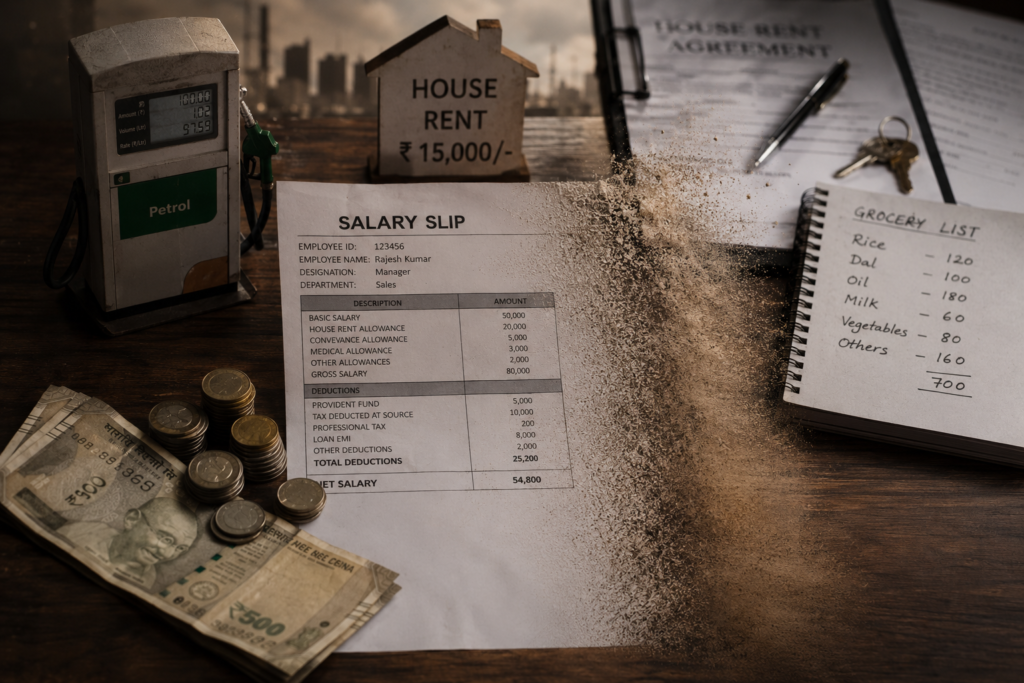
You get your salary every month, but somehow it feels like you’re getting poorer. The number on your payslip stays the same or grows slightly, yet you can buy less food, pay higher rent, and spend more on fuel. This is exactly how inflation affects your salary quietly and steadily.
Most people think inflation is just “prices going up.” But for salaried people, it’s much more dangerous. It slowly steals your purchasing power without you noticing. In this post, we’ll use simple real-life examples from food, rent, and fuel to show you what’s really happening.

What Does "How Inflation Affects Your Salary" Really Mean?
How inflation affects your salary means your money loses value over time. Even if your boss gives you a 10% hike, inflation at 7-8% can eat most of it. What remains is not real growth – it’s just keeping up.
This effect is called “inflation erosion.” It reduces what economists call real wages.
Real-Life Examples: Food, Rent, and Fuel
How Grocery Bills Show How Inflation Affects Your Salary
Last year, a 5kg rice bag cost ₹250. Today it costs ₹320. Your monthly grocery bill that was ₹8000 is now easily crossing ₹11,000. Even with the same salary, you’re spending more on the same food. This is a direct example of how inflation affects your salary.
Rising Rent and Its Impact on Your Take-Home Pay
In many Indian cities, rent has jumped 15-25% in the last two years. If you were paying ₹15,000 rent in 2024, you might now pay ₹18,000-19,000. That extra ₹4,000 comes straight from your salary’s buying power.
Fuel Prices: The Silent Salary Killer
Petrol and diesel prices directly affect everything – commuting, cab rides, and even the price of vegetables. When fuel costs rise, your monthly transport expense can increase by ₹1,500-2,500 easily. This quietly reduces the real value of your salary.

The Hidden Math Behind Salary Theft
Suppose you earn ₹50,000 per month. With 8% inflation, you need at least ₹54,000 next year just to buy the same things. If your company gives only 6% hike, you’re actually losing money in real terms.
According to Investopedia, inflation reduces purchasing power. This is exactly how inflation affects your salary in India.
Comparison Table: Your Salary Then vs Now
| Item | 2024 Price | 2026 Price | Monthly Extra Cost |
|---|---|---|---|
| Monthly Groceries | ₹8,000 | ₹11,000 | ₹3,000 |
| House Rent | ₹15,000 | ₹19,000 | ₹4,000 |
| Fuel & Transport | ₹3,000 | ₹4,800 | ₹1,800 |
| Total | ₹26,000 | ₹34,800 | ₹8,800 |
This table clearly shows how inflation affects your salary – you lose almost ₹9,000 in real value every month.
Pros and Cons of Living with Inflation
Pros
- It can reduce the real value of debt over time
- Encourages spending and investment rather than saving
- Can lead to salary hikes and bonuses in growing companies
Cons
- Reduces your actual lifestyle and savings power
- Hits middle-class families the hardest
- Creates uncertainty in financial planning
- Makes retirement goals much harder to achieve
Practical Guide: How to Fight Back Against Inflation
Here’s how you can protect yourself:
• Track your expenses every month
• Invest in assets that beat inflation like equity mutual funds
• Negotiate better salary hikes every year
• Cut unnecessary subscriptions and lifestyle costs
• Build an emergency fund that earns interest
• Learn about smart money management at NextGenDecode.in
Small consistent actions can reduce the damage caused by how inflation affects your salary.

Conclusion
Understanding how inflation affects your salary is the first step to fighting it. Stop accepting silent losses. Start tracking your real purchasing power and take action today. Your future self will thank you.
FAQ Section
What exactly is how inflation affects your salary?
How inflation affects your salary means the rising cost of living reduces what your salary can actually buy. Even if your pay stays the same or increases slightly, higher prices for food, rent, and fuel quietly lower your real income. This is called loss of purchasing power.
How much salary do I need to beat inflation in India?
To stay ahead, your salary hike should be at least 3-4% higher than the current inflation rate. If inflation is 6%, aim for an 9-10% raise. Otherwise, you are slowly losing money every year in real terms.
Does inflation always hurt salaried people?
Yes, in most cases it does. Salaried employees usually get fixed or small annual hikes that rarely match rising prices. Business owners or investors can adjust prices or returns more easily, but fixed salary earners feel the pressure the most.
Can I really protect my salary from inflation?
Absolutely. Start by investing in equity mutual funds, gold, or stocks that grow faster than inflation. Cut unnecessary expenses, track monthly spending, and negotiate better hikes. Small consistent steps make a big difference.
How does fuel price rise impact my salary?
Fuel price increases directly raise your commuting costs and indirectly increase the price of almost everything you buy. A ₹5-7 per litre rise in petrol can easily add ₹1,500–2,500 to your monthly expenses, reducing the real value of your salary.