
Why Apple Geopolitics Is the Real Secret Behind Its $3 Trillion Power
I still remember the day my cousin pulled out his brand-new iPhone at a family dinner and the whole table went quiet. Not because the phone was expensive but because everyone wanted one. That single moment made me think: how does one company, headquartered in Cupertino, California, manage to make billions of people across the world feel that way?
The answer isn’t just good design. It’s Apple’s geopolitics business strategy a carefully built web of manufacturing alliances, trade decisions, market positioning, and quiet political maneuvering that most people never think about while scrolling through their apps.
This post breaks down exactly how Apple operates on a global chess board and why it’s likely to stay one of the most powerful and in-demand brands for decades to come.
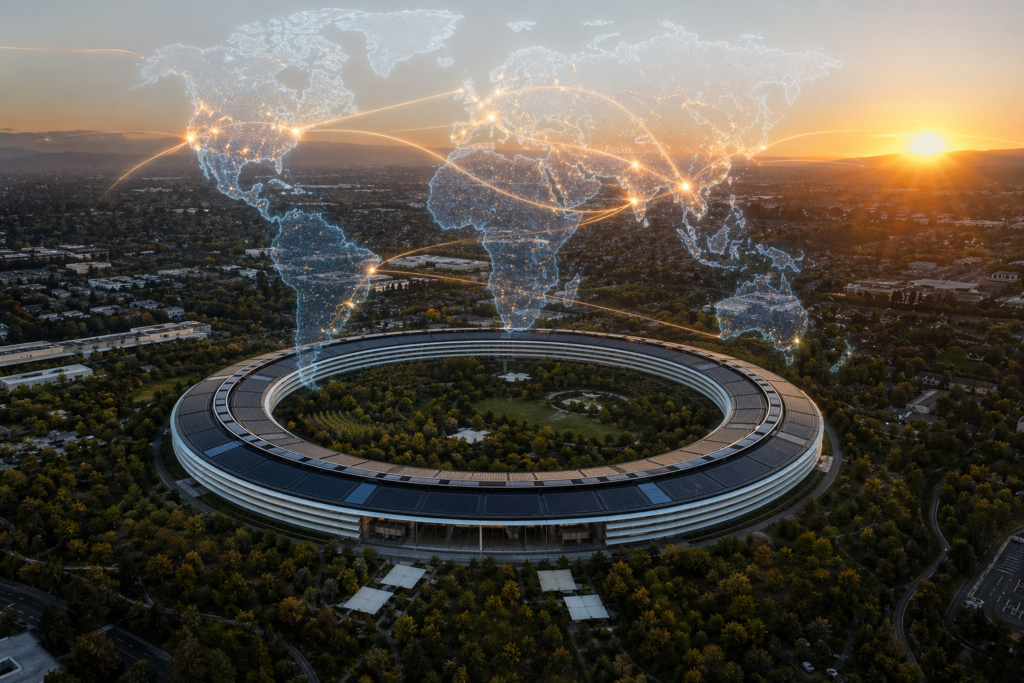
Table of Contents
Apple Is More Than a Tech Company — It's a Geopolitical Player
Most people think Apple sells phones, laptops, and earbuds. And yes it does. But Apple’s real product is trust. The brand has spent 48 years convincing people that its products represent quality, status, and intelligence.
That emotional connection is worth more than any single product. It’s why people line up outside stores. It’s why a used iPhone holds its value better than most new Android phones. And it’s why Apple crossed $3 trillion in market value making it one of the most valuable companies in human history.
But here’s what the headlines miss: Apple didn’t get there by luck. It got there by playing a very smart geopolitical game, quietly and consistently, for decades.
Apple Geopolitics and the China Problem: The $200 Billion Gamble
This is where things get fascinating and complicated.
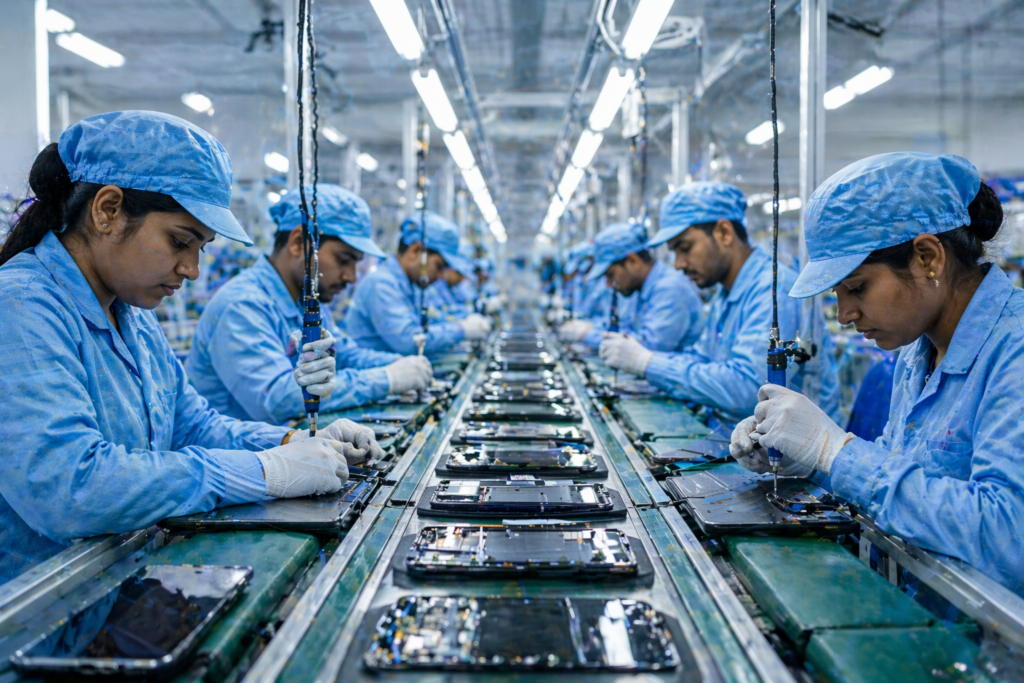
For years, Apple built almost everything in China. Why? Because China offered something no other country could match: scale, speed, skilled labor, and incredibly low costs. At its peak, over 90% of iPhones were assembled in China, primarily through Foxconn.
That worked brilliantly until it didn’t.
The US-China trade war that intensified between 2018 and 2022 forced Apple to confront a scary reality: they had put almost all their eggs in one basket. Tariffs, sanctions, and political tensions suddenly threatened their entire supply chain. If the US government slapped a major tariff on Chinese-made electronics, Apple’s margins would collapse overnight.
So what did Apple do? They quietly diversified without making a big announcement. They started shifting production to Vietnam (for AirPods, iPads) and began a major push into India. They didn’t panic they planned.
This is exactly what makes Apple’s geopolitics business strategy so impressive. They saw the storm coming years early and started building lifeboats before the rain started.
How Apple's Geopolitics Strategy Quietly Conquered India
India is Apple’s next big bet and it’s already paying off.
With 1.4 billion people, a growing middle class, and a government that actively wants to replace China as the world’s manufacturing hub, India is the perfect next chapter for Apple. Under India’s Production Linked Incentive (PLI) scheme, companies get financial rewards for manufacturing locally. Apple jumped at that.
By 2024, Apple was making roughly 14–15% of all iPhones in India, with targets to push that to 25% by 2026. That’s a massive shift in just a few years.
And it’s not just manufacturing. India’s consumer market is exploding. Apple opened its first official retail stores in Mumbai and Delhi in 2023. Both were packed on day one. Indians who once bought second-hand iPhones are now saving up for new ones because Apple has made ownership a symbol of aspiration.
The geopolitical logic is smart too. India and the US have strong strategic ties. Shifting production there reduces Apple’s exposure to US-China friction, while opening a massive new consumer market at the same time. It’s a two-for-one move that few competitors are positioned to match.
The Supply Chain Web No Competitor Can Copy
Something wild: Apple doesn’t actually make most of its components. It designs them, then gets specialized manufacturers around the world to produce them.
The display? Samsung and LG in South Korea. The chips? TSMC in Taiwan (though Apple is pushing for US-based chip production through the CHIPS Act). The cameras? Sony in Japan. Assembly? Foxconn and Tata in India and China.
What holds this together is Apple’s legendary supply chain control. Apple often pays suppliers years in advance, signs exclusive deals, and builds relationships so tight that suppliers essentially become dependent on Apple’s business.
According to Forbes, this supply chain model is one of the primary reasons Apple generates margins that most tech companies can only dream about.
No competitor has been able to replicate this web not Samsung, not Google, not Xiaomi. It took Apple 20+ years to build, and the moment any competitor tries to copy it, Apple evolves it further.
Pros & Cons of Apple's Global Strategy
Every strategy has tradeoffs. Here's an honest look:
Pros:
- Massive brand loyalty that survives political and economic storms
- Diversified manufacturing reducing single-country dependency
- Premium pricing that protects profit margins in all markets
- Services revenue (App Store, iCloud, Apple TV+) growing independent of hardware sales
- First-mover advantage in India’s premium smartphone market.
Cons:
- Still heavily dependent on China for many components
- Premium pricing locks out billions of potential customers in lower-income markets
- Regulatory pressure in the EU (USB-C requirement, antitrust) threatens App Store revenue
- Geopolitical tensions between US and China remain an existential risk to supply chains
- Heavy reliance on Taiwan’s TSMC for chips creates vulnerability if Taiwan tensions escalate
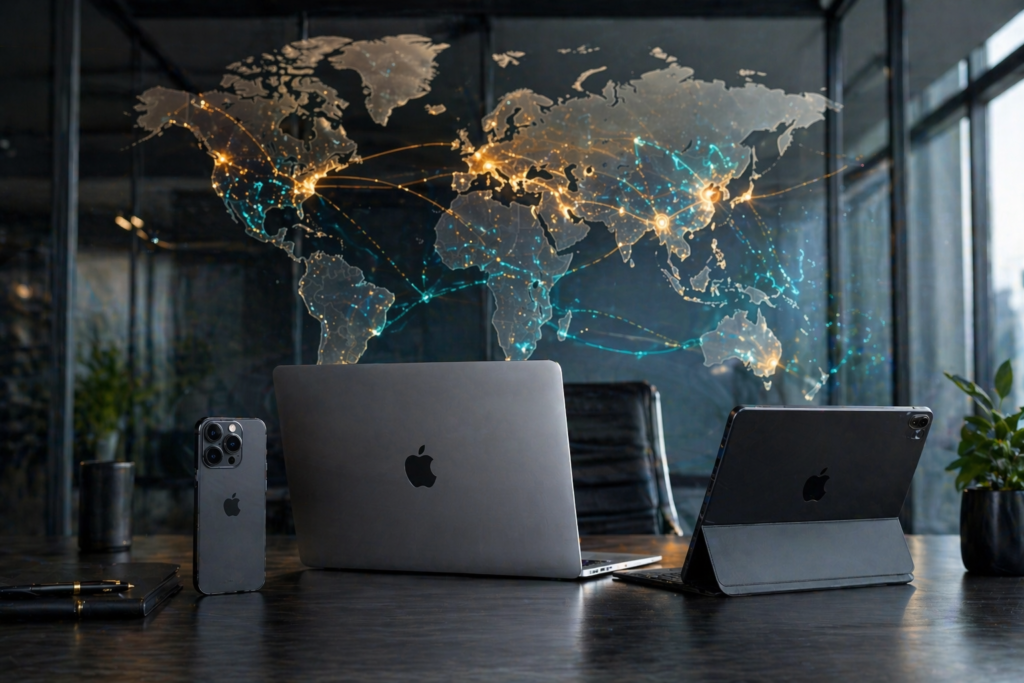
Comparison: Apple vs. Competitors on Global Strategy
| Feature | Apple | Samsung | Google (Pixel) | Xiaomi |
|---|---|---|---|---|
| Manufacturing Diversification | High (India, Vietnam, China) | Medium (Korea, Vietnam) | Low (outsourced) | Medium (China-heavy) |
| Brand Premium Power | Very High | High | Medium | Low |
| Services Ecosystem | Very Strong | Moderate | Strong | Weak |
| Geopolitical Risk Level | Medium (reducing) | Medium | Low-Medium | High (China-dependent) |
| Emerging Market Presence | Growing fast | Strong | Limited | Very Strong |
| Supply Chain Independence | High | Medium | Low | Medium |
Apple’s lead in the premium segment, combined with its services ecosystem, gives it a uniquely durable position. Samsung competes on hardware specs but can’t match Apple’s ecosystem lock-in. Google has the software but lacks Apple’s manufacturing discipline. Xiaomi dominates budget markets but remains extremely China-dependent a serious risk as geopolitical tensions rise.
How to Spot Brands That Will Survive Geopolitical Shifts
Not every global brand is built to survive what’s coming. If you’re curious about which companies (beyond Apple) are positioning themselves well, here’s what to look for:
- Supply chain diversification — Are they reducing China dependency?
- Services and software revenue — Hardware margins shrink; services margins grow
- Brand loyalty depth — Can customers switch easily or is there real ecosystem lock-in?
- Government relations — Are they aligned with the political direction of key markets?
- Local manufacturing investments — Companies building locally in growing economies get regulatory and consumer goodwill
You can also explore deep dives into emerging tech business models at NextGenDecode — the analysis there on future-proof tech brands is worth bookmarking.
Conclusion
The Real Lesson Behind Apple Geopolitics
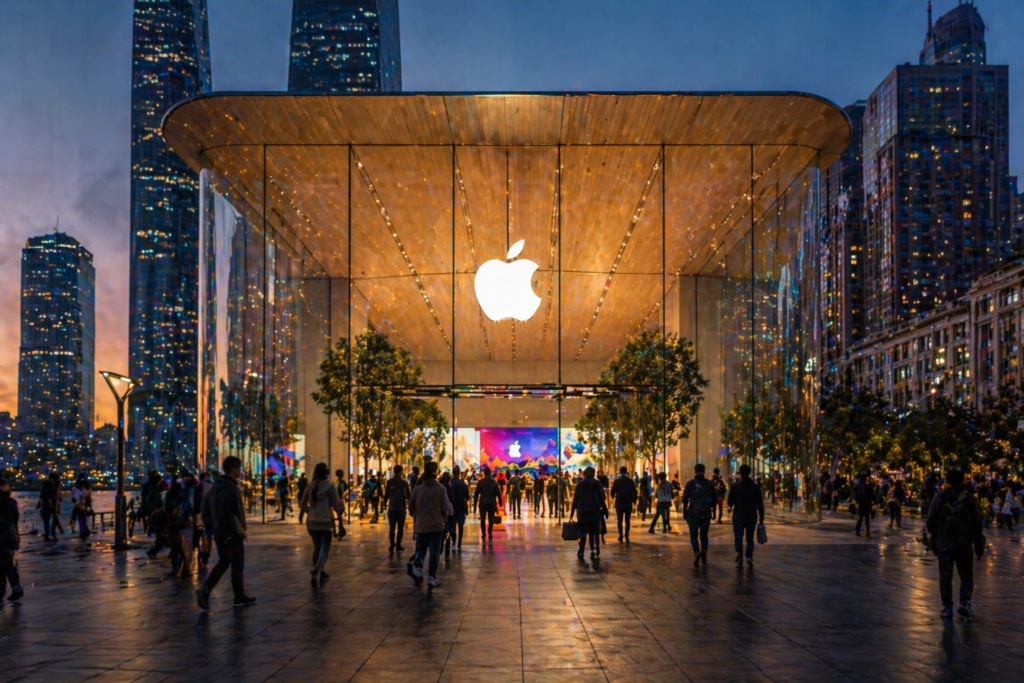
Apple didn’t become a $3 trillion brand by accident. It became one because it treated business as geopolitics reading the world map the same way it reads consumer trends.
From its brilliant pivot away from China, to its calculated conquest of India, to its unkillable supply chain Apple keeps proving that the most powerful brands aren’t just great products. They’re great strategies.
If you’re trying to understand which brands will define the next 20 years, watch how they handle the world’s political fault lines. Apple is doing it better than almost anyone.
The brands that survive geopolitical disruption aren’t the ones that avoid it. They’re the ones that plan for it years in advance.
Frequently Asked Questions
Q1: What is Apple’s geopolitics business strategy in simple terms? Apple manages its global operations by carefully balancing its relationships with governments, manufacturers, and consumers across multiple countries. It diversifies where it makes products and where it sells them to reduce risk from political disruptions like trade wars or sanctions.
Q2: Why is Apple moving iPhone manufacturing from China to India? Apple is reducing its dependency on China due to US-China trade tensions and the risk of tariffs. India offers lower labor costs, a large skilled workforce, government manufacturing incentives, and a fast-growing premium consumer market making it the ideal next manufacturing hub.
Q3: How does geopolitics affect the price of Apple products? Tariffs, trade wars, and supply chain disruptions can increase Apple’s production costs, which can eventually lead to higher retail prices. Apple’s geopolitics strategy is designed to minimize these cost shocks through diversification.
Q4: Will Apple remain the most valuable brand despite global political tensions? Apple’s services ecosystem the App Store, iCloud, Apple Pay, Apple TV+ generates recurring revenue that is largely insulated from hardware supply chain issues. This makes Apple’s overall business more resilient than most hardware-focused competitors.
Q5: Which Apple competitors have the best geopolitical strategies? Samsung has strong diversification in Vietnam and Korea. Google is relatively low-risk due to outsourced hardware. However, neither has matched Apple’s combination of supply chain control, brand loyalty, and services revenue which together make Apple’s global position uniquely durable.