
Table of Contents
Introduction: The Material Revolution Happening Right Now
Walk into any major design studio or packaging lab right now and something has shifted. The foam, the plastic, the synthetic leather materials that defined the last 60 years of manufacturing are being replaced. Not with something worse or more expensive, but with things that literally grow out of the ground.
Plant-based materials innovation is not a niche science experiment anymore. It is a full-scale industrial shift being driven by brands, startups, and governments that know the old way is simply not sustainable. From mushroom packaging to seaweed wrapping to pineapple-derived leather, the materials world is being reinvented faster than most people realize.
This post walks through 8 of the most exciting breakthroughs, what makes them work, why they matter, and what you can actually do with this information.
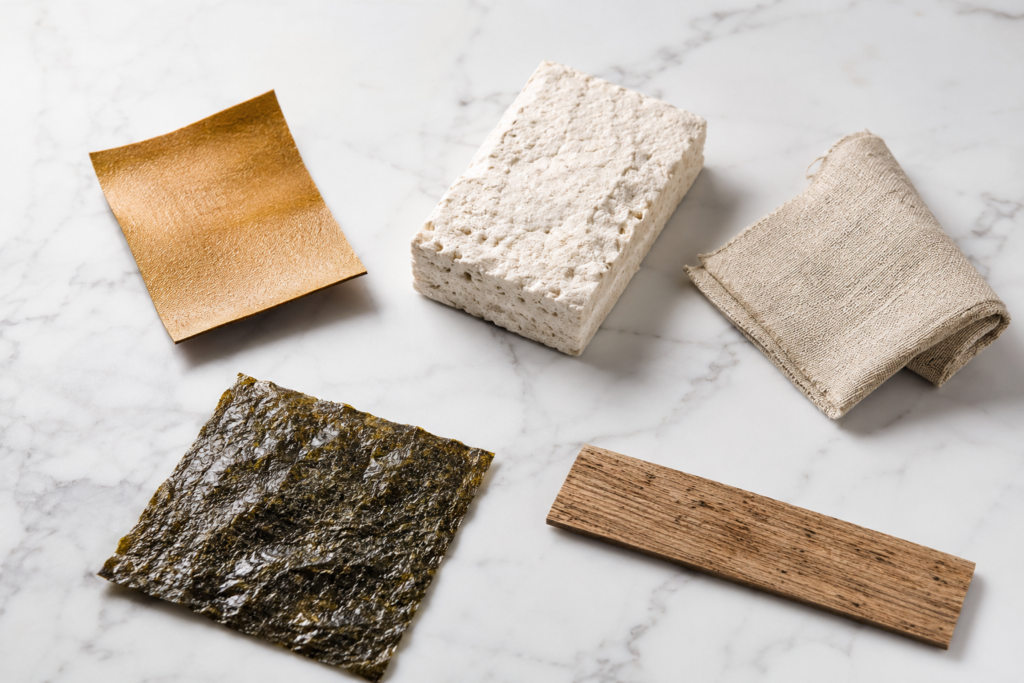
Plant-Based Materials Innovation: 8 Breakthroughs You Need to Know
Each of these is already in commercial use or active production. These are not concepts waiting for funding. They are real, available, and growing.
Mycelium: The Mushroom That Replaces Styrofoam
Mycelium is the underground root network of mushrooms. Companies like Ecovative Design have learned to grow it into custom shapes using agricultural waste as a base. The result is a packaging foam that is fully compostable, strong enough to protect fragile goods, and biodegrades in weeks rather than centuries.
IKEA and Dell have already used mycelium packaging in their supply chains. It requires no petroleum, no synthetic chemicals, and produces almost no waste during manufacturing. This is one of the most commercially mature breakthroughs in plant-based materials innovation today.
Hemp Fiber: The Ancient Material Making a Modern Comeback
Hemp was used for rope, fabric, and building materials for thousands of years before it got swept into legal gray zones in the 20th century. Today, industrial hemp is legal in most countries and experiencing a remarkable revival.
Hemp fiber is stronger than cotton, grows without pesticides, requires very little water, and improves soil health during cultivation. It is now being used in everything from hempcrete (a bio-based concrete alternative) to luxury textiles, car door linings, and sustainable paper products. The versatility is genuinely impressive.
Seaweed Packaging: Edible and Fully Biodegradable
Seaweed grows fast, requires no fresh water, no fertilizer, and absorbs carbon dioxide while it grows. Turning it into packaging material makes almost too much sense.
Startups like Notpla have developed seaweed-based pouches and coatings that dissolve in water within weeks and are safe to consume. These are already being used at major sporting events to replace single-use plastic cups and sachets. The material looks and feels like plastic but behaves like food.
Pineapple Leather: Pinatex and the Future of Fashion
Pinatex is a leather alternative made from the fiber found in pineapple leaves, which are normally agricultural waste. Developed by Ananas Anam, it has been adopted by brands like Hugo Boss, H&M, and Paul Smith as a premium material for shoes, bags, and accessories.
It does not require animal farming, it reduces agricultural waste, and its texture is strikingly similar to real leather. This is one of the clearest examples of how plant-based materials innovation is transforming the fashion industry without sacrificing quality or aesthetics.
Corn-Based Bioplastics: Replacing Single-Use Plastics
Polylactic acid (PLA) is a bioplastic derived from fermented corn starch or sugarcane. It is used to make cups, trays, cutlery, and packaging that look exactly like conventional plastic but are compostable under the right conditions.
The material is already widespread in food service and retail packaging. Its major limitation is that it requires industrial composting facilities to break down properly, which is not yet universally available. Still, as infrastructure catches up, PLA represents one of the most scalable alternatives in the bioplastics space.
Bamboo Composites: Stronger Than You Think
Bamboo is one of the fastest-growing plants on Earth, reaching full maturity in three to five years compared to decades for hardwood trees. As a composite material, bamboo can match or exceed the tensile strength of steel in specific applications.
It is being used in flooring, furniture, bicycle frames, construction scaffolding, and even as a reinforcement material in concrete. According to Wikipedia’s entry on bamboo construction, bamboo has been used structurally in Asia for centuries, and modern engineering is now unlocking its potential at industrial scale globally.
Algae-Based Inks and Coatings
Conventional printing inks rely on petroleum-based pigments that release volatile organic compounds during production and printing. Algae-based inks change that entirely.
Companies like Living Ink Technologies have developed inks made from algae that are carbon-negative in production, non-toxic, and perform comparably to conventional inks in commercial printing. The same algae technology is being extended into surface coatings, packaging films, and even textile dyes.
Banana Fiber: The Textile Industry’s Hidden Asset
Banana plants produce enormous quantities of stem fiber that is typically burned or discarded after harvest. That fiber is now being spun into textiles that are silky in texture, naturally antibacterial, and fully biodegradable.
Banana fiber fabric requires no synthetic processing chemicals and produces a material that competes with silk in softness. Brands focused on sustainable luxury are beginning to incorporate it into high-end garments and accessories, making it one of the quieter but genuinely exciting threads in plant-based materials innovation.
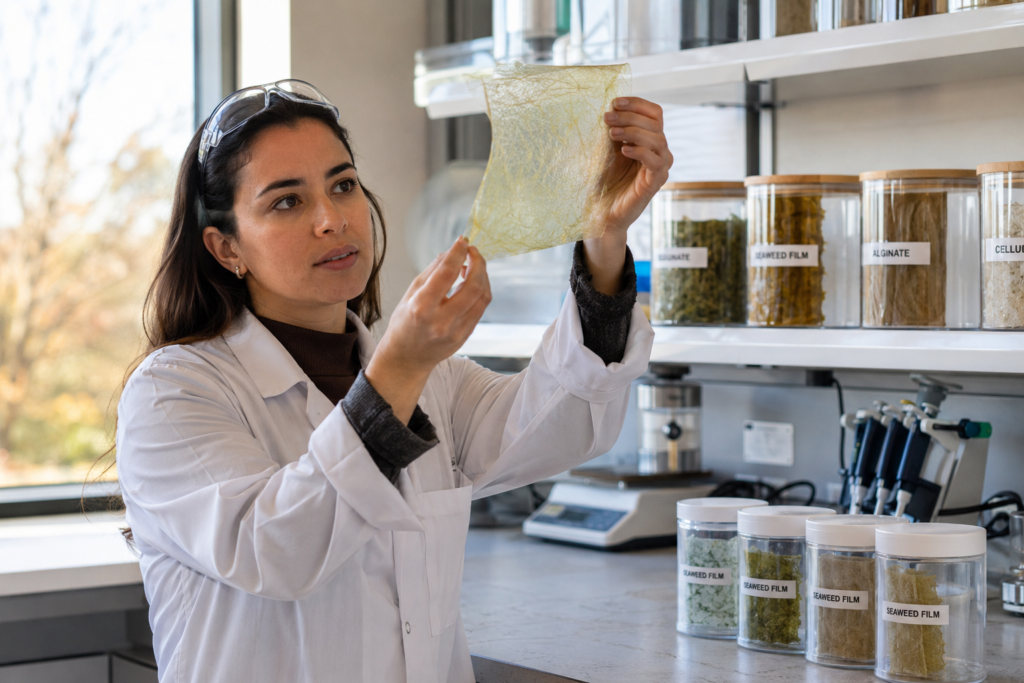
Why Plant-Based Materials Innovation Is Moving So Fast
A few years ago, most of these materials existed only in research labs. The shift to commercial viability has happened quickly for three clear reasons.
First, consumer demand has changed dramatically. According to Forbes, younger consumers increasingly prioritize sustainability in purchasing decisions, and brands that cannot demonstrate credible environmental commitments are losing market share.
Second, regulation is accelerating the transition. Single-use plastic bans are now active in the EU, UK, India, and dozens of other markets. This creates an urgent need for alternatives that actually work at scale, and plant-based materials are filling that gap.
Third, material science has genuinely advanced. Better processing techniques, improved durability treatments, and lower production costs mean these materials can now compete with synthetic alternatives on performance, not just values.
Traditional Materials vs Plant-Based Alternatives: A Comparison
| Material Category | Traditional Option | Plant-Based Alternative | Biodegradable | Carbon Impact |
|---|---|---|---|---|
| Packaging foam | Styrofoam (EPS) | Mycelium foam | Yes | Much lower |
| Leather goods | Animal leather | Pinatex (pineapple) | Partially | Significantly lower |
| Single-use plastic | Petroleum plastic | PLA bioplastic | Yes (industrial) | Lower |
| Construction material | Concrete, steel | Bamboo composite | Yes | Much lower |
| Textile fabric | Polyester, cotton | Hemp or banana fiber | Yes | Lower |
| Printing ink | Petroleum ink | Algae-based ink | Yes | Carbon negative |
| Food packaging | Plastic wrap | Seaweed-based film | Yes | Minimal |
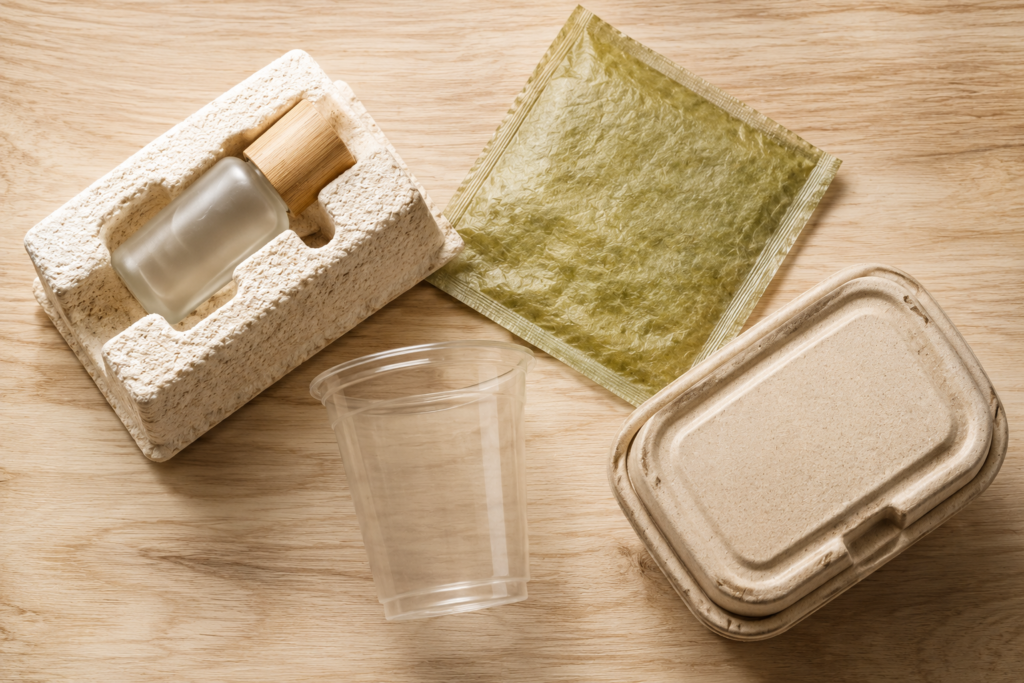
Pros and Cons of Plant-Based Materials
Pros of Plant-Based Materials
- Fully or partially biodegradable, reducing landfill and ocean pollution significantly.
- Lower carbon footprint across most production processes compared to synthetic materials.
- Often made from agricultural waste, turning a disposal problem into a production resource.
- Non-toxic production in most cases, safer for workers and surrounding ecosystems.
- Renewable by nature: plants regrow, petroleum does not.
- Growing commercial availability: more products, more suppliers, more competitive pricing every year.
Cons of Plant-Based Materials
- Higher cost at current scale compared to mass-produced synthetic alternatives.
- Performance limitations: some plant-based materials still cannot match synthetic durability in demanding applications.
- Infrastructure gap: materials like PLA bioplastics require industrial composting facilities that are not yet widespread.
- Land use concerns: scaling some plant-based materials requires significant agricultural land, which raises its own environmental questions.
- Inconsistent standards: labeling and certification for “bio-based” or “compostable” vary by region and can mislead consumers.
Practical Guide: How to Start Using Plant-Based Materials Today
Whether you are a business owner, designer, or conscious consumer, here is how to start engaging with this shift practically:
- For packaging decisions: Look for certified compostable packaging suppliers using mycelium, seaweed, or PLA. Certifications like TUV Austria OK Compost or ASTM D6400 confirm genuine biodegradability.
- For product design: Explore material libraries like Material ConneXion or Biomimicry 3.8 to source plant-based textiles, composites, and coatings relevant to your product category.
- For fashion and retail: Check supplier certifications for Pinatex, hemp fabric, or bamboo textiles. Demand supply chain transparency before committing to a material.
- For construction projects: Research hempcrete and bamboo composite suppliers in your region. These materials are especially cost-competitive in warm climates where bamboo grows locally.
- For printing and marketing materials: Ask your print supplier about algae-based or soy-based ink options. Many commercial printers already offer these without significant price increases.
- For personal purchases: Choose products with credible eco-material labeling. Look for brands that name the specific plant-based material and explain its origin and end-of-life behavior.
For more deep-dive guides on innovation, technology, and sustainable business, visit NextGenDecode.in and explore our full content library.

What This Shift Means for All of Us
Plant-based materials innovation is not just an environmental story. It is an economic one, a design one, and a business opportunity story all at once.
The 8 breakthroughs covered here (mycelium, hemp, seaweed, pineapple leather, bioplastics, bamboo, algae inks, and banana fiber) represent a broader pattern: materials that were either dismissed or unknown a decade ago are now entering mainstream production. That shift is accelerating, not slowing.
For businesses, the message is clear: the companies that figure out how to incorporate these materials now will have a meaningful head start as regulations tighten and consumer expectations rise. For individuals, every purchase choice is a vote for the kind of material economy we want to build.
The ground beneath the old industrial world is shifting. And quite literally, it is shifting toward plants.
Frequently Asked Questions About Plant-Based Materials Innovation
What is plant-based materials innovation and why does it matter?
Plant-based materials innovation refers to the development and commercial application of materials derived from plants, fungi, or algae as replacements for petroleum-based, animal-derived, or synthetically produced materials. It matters because traditional materials like plastic, leather, and styrofoam create massive environmental damage across their entire lifecycle, from production to disposal. Plant-based alternatives offer lower emissions, biodegradability, and renewable sourcing.
Are plant-based materials actually better for the environment?
In most cases, yes, but the full picture matters. Plant-based materials generally produce fewer greenhouse gas emissions, biodegrade more safely, and require fewer toxic chemicals to produce. However, some, like PLA bioplastic, only compost properly in industrial facilities. Others require significant land use. The environmental benefit depends on the specific material, how it is processed, and what infrastructure exists at end of life.
Which industries are adopting plant-based materials innovation fastest?
Fashion and packaging are currently leading adoption, driven by consumer pressure and incoming legislation. Construction is growing quickly, particularly in markets where bamboo and hemp are locally grown. The food and beverage industry is also moving fast on seaweed and bioplastic packaging as single-use plastic bans take effect globally.
How affordable are plant-based materials compared to traditional ones?
Most plant-based materials are currently more expensive than their synthetic equivalents at current production volumes. However, prices are falling quickly as demand scales and manufacturing processes improve. Mycelium packaging, for example, has become cost-competitive with styrofoam for some applications in recent years. As policy support and investment grow, cost parity across more categories is expected within this decade.