
Table of Contents
Introduction: The Real Battle Behind Every War
Here’s something most textbooks never tell you. The biggest battles in history weren’t always fought with guns.
Think about it. The United States didn’t just outshoot the Soviet Union during the Cold War. It outspent it. Economic pressure, not missiles, ended a superpower. When Russia invaded Ukraine in 2022, the world’s response wasn’t just military aid. It was sanctions – cutting off oil revenues, freezing assets, and isolating the entire Russian economy.
Economic power vs military power is one of the most important debates in global politics today. And it affects every nation, including yours.
In this post, you’ll learn exactly what each type of power means, how they work, and which one actually determines who wins on the world stage.
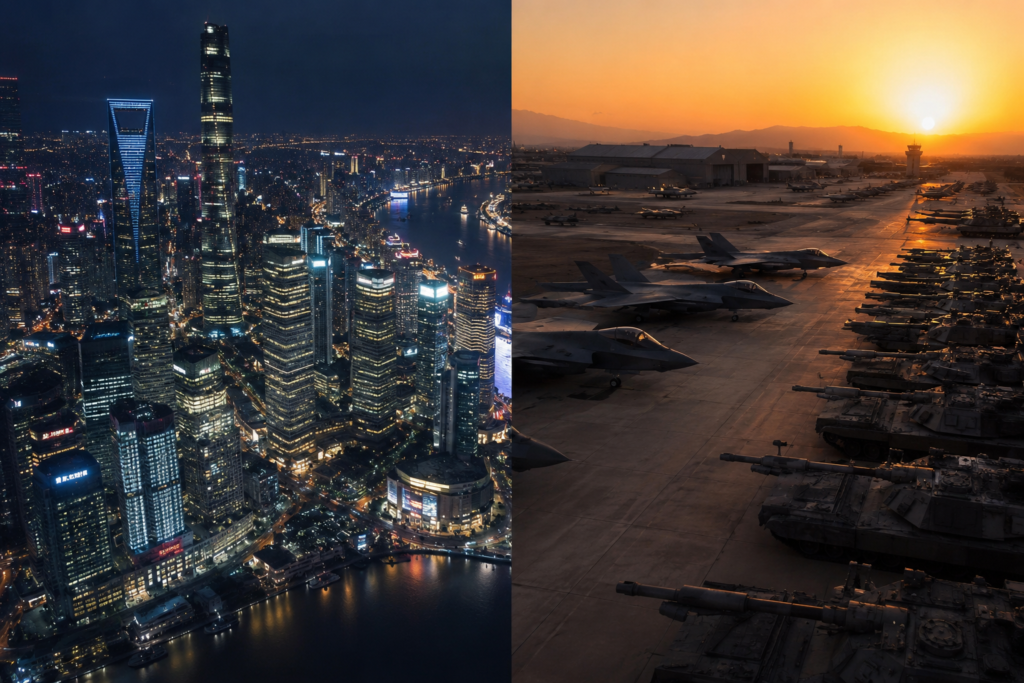
Economic Power vs Military Power: What They Actually Mean
Before comparing the two, you need to understand what each one actually is. Most people mix them up or assume one always beats the other.
What Is Economic Power?
Economic power is the ability of a country to influence others through money, trade, investment, and financial systems. It’s not just about being rich. It’s about controlling the rules of the global economy.
A country with strong economic power can:
- Impose trade sanctions that cut off another nation’s income
- Control access to key technology and supply chains
- Offer loans and investments to build loyalty from smaller nations
- Set global financial standards through institutions like the IMF and World Bank
The United States, China, and the European Union are the clearest examples today. Their currencies, trade policies, and financial networks shape every economy on Earth.
What Is Military Power?
Military power is the ability to use or threaten force to achieve political goals. It includes armies, navies, air forces, nuclear weapons, and intelligence capabilities.
Military power can:
- Defend borders and deter invasions
- Project force in distant regions
- Signal strength and resolve to rivals
- Back up diplomatic demands with credible threats
Russia and the United States currently hold the world’s two largest nuclear arsenals. But as we’ll see, raw military strength alone doesn’t always translate to lasting global influence.
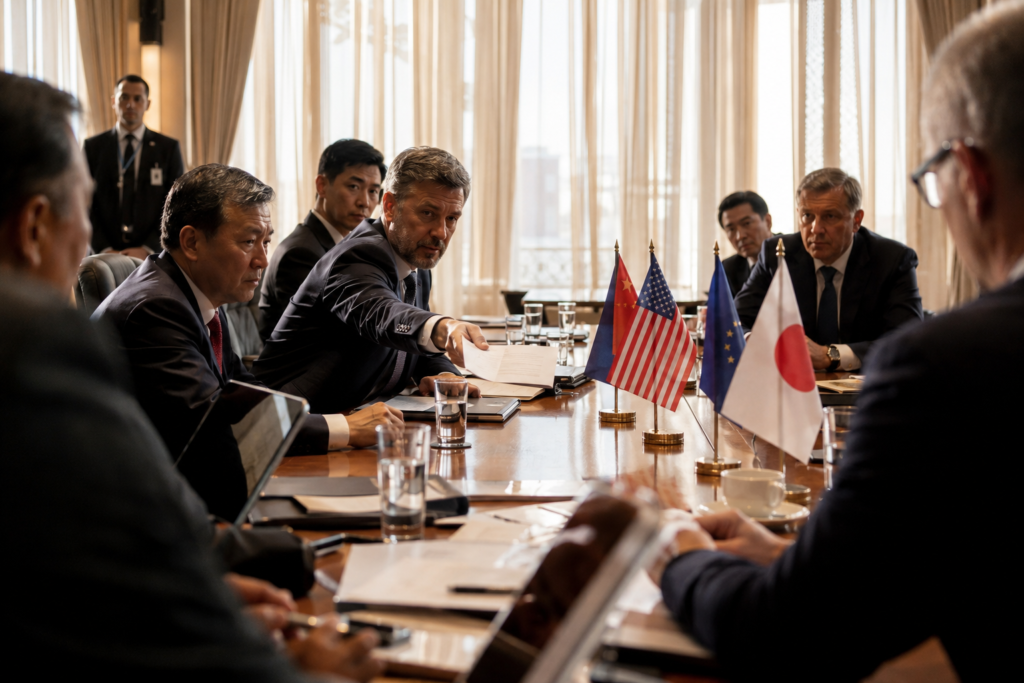
How Economic Power Controls Nations Without Firing a Shot
This is where it gets really interesting. Economic tools can be more devastating than bombs – and far more precise.
Consider sanctions. When the US and EU placed sanctions on Iran’s oil sector, they didn’t launch a single missile. Yet Iran lost over 60% of its oil export revenue. The economy contracted, inflation skyrocketed, and the government was forced to negotiate.
The same happened with Russia after 2022. Within months of the Ukraine invasion, Western sanctions froze over $300 billion in Russian central bank assets. Global brands pulled out. The ruble collapsed overnight.
Economic power also works through dependency. China’s Belt and Road Initiative has invested over $1 trillion in infrastructure across Africa, Asia, and Latin America. These countries now rely on Chinese loans, ports, and roads. That dependency gives China enormous political leverage – without deploying a single soldier.
This is what experts call soft power combined with economic coercion. According to Wikipedia’s analysis of economic sanctions, sanctions have been used over 100 times since World War II as a primary foreign policy tool – far more than military intervention.
The 6 Key Differences Between Economic and Military Power
Now let’s break down the six most important ways these two types of power differ.
Sustainability: Which Power Lasts Longer?
Economic power compounds over time. A country that builds strong industries, exports, and financial networks keeps growing in influence. Military power, by contrast, requires constant spending just to maintain.
The United States spends over $800 billion per year on defense. That’s money not going into education, infrastructure, or innovation. Meanwhile, countries like Germany and Japan, which rebuilt their economies after World War II and limited military spending, became top-five global economies.
Reach: Who Can Influence More Countries?
Economic power reaches every country on Earth through trade and finance. Military power reaches only where troops or weapons can physically go.
China influences African nations economically through investment. It doesn’t need military bases there to have geopolitical leverage. Economic networks cross every border without a single soldier.
Cost: Which One Drains a Nation Faster?
Wars are extraordinarily expensive. The US spent over $2 trillion on the Afghanistan War over 20 years. The economic cost included not just military spending but lost productivity, veteran healthcare, and diplomatic fallout.
Economic tools – trade deals, sanctions, investment – achieve results at a fraction of the cost. Smart nations use economic power first.
Legitimacy: Which Power Gets More Respect?
Countries that use economic tools – aid, trade deals, development loans – are often seen as partners, not aggressors. Military intervention, even when justified, often creates lasting resentment.
The Marshall Plan, where the US invested $13 billion to rebuild Europe after World War II, created generations of allied democracies. That investment in economic diplomacy yielded more long-term security than any military campaign could.
When Military Power Fails Without Economic Backing
Military power without economic strength is like a car with no fuel. It looks powerful sitting there. But it doesn’t go anywhere.
The Soviet Union had one of the most formidable militaries in history. Thousands of nuclear warheads. A massive conventional army. But its economy was crumbling underneath. When economic collapse came in 1991, all that military power couldn’t save the state. No army can prop up a broken economy forever.
The same story played out in Nazi Germany. By 1944, Germany was losing the war partly because it was running out of oil, raw materials, and industrial capacity. The Allied strategy targeted German supply chains and infrastructure – an economic war that strangled the military machine.
Even today, North Korea is a perfect case study. It has nuclear weapons and a large standing army. But its economy is so isolated and weak that the country can’t feed its own people. Military power, without the economic foundation, becomes a very expensive and fragile shield.
Real-World Examples That Prove the Point
Let’s look at three clear real-world comparisons.
1. United States vs Soviet Union (Cold War) The US won the Cold War primarily through economic exhaustion of its rival. The Soviet Union couldn’t match American economic output, technology development, or consumer prosperity. The arms race accelerated the economic collapse. Economic power won – not military superiority alone.
2. China’s Rise Without Major Wars China became the world’s second-largest economy without fighting any significant wars in the last 40 years. Instead, it used trade, investment, and manufacturing dominance. Today it holds more global economic influence than any country except the United States – built almost entirely through economic strategy.
3. European Union’s Quiet Power The EU has almost no unified military force but has enormous economic power. It’s the world’s largest trading bloc. When it imposes sanctions or changes trade terms, entire economies shift. Its economic leverage far outweighs its military capacity.
According to Forbes, nations that invest in economic infrastructure consistently rank higher on global influence indexes than those that prioritize military spending alone.
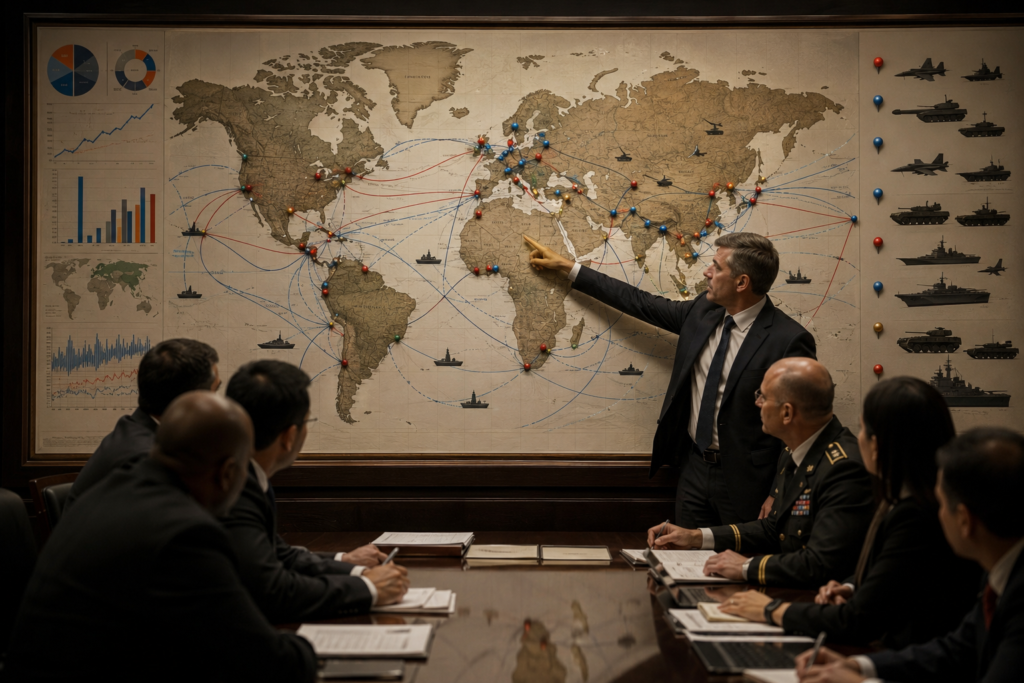
Economic vs Military Power: Comparison Table
| Factor | Economic Power | Military Power |
|---|---|---|
| Primary Tool | Trade, sanctions, investment | Armed forces, weapons |
| Cost | Lower, scalable | Very high, ongoing |
| Reach | Global through markets | Limited by logistics |
| Sustainability | Grows over time | Requires constant spending |
| Legitimacy | Often seen as partnership | Can create resentment |
| Speed of Effect | Slower but lasting | Fast but temporary |
| Best Used For | Long-term influence, deterrence | Direct defense, deterrence |
| Modern Example | China’s Belt and Road | US military bases worldwide |
| Historical Example | Marshall Plan | NATO Cold War deterrence |
| Risk | Trade wars, dependency | Casualties, blowback |
Pros and Cons of Relying on Economic vs Military Power
Pros of Economic Power
- Creates lasting alliances through mutual financial interest
- Influences more countries simultaneously without physical presence
- Compounds over time – a stronger economy enables more investment
- Seen as legitimate and cooperative by most of the international community
- Costs far less than sustained military operations
- Can be applied precisely with targeted sanctions or trade.
Cons of Economic Power
- Slow to produce results in crisis situations
- Can backfire if sanctioned countries find alternative partners
- Vulnerable to counter-coalitions (e.g., BRICS challenging dollar dominance)
- Doesn’t work when a regime prioritizes ideology over economic welfare
- Requires strong domestic institutions to maintain credibility
Pros of Military Power
- Immediate deterrence against direct military threats
- Essential for protecting territorial sovereignty
- Signals resolve and credibility to both allies and adversaries
- Can resolve crises quickly when other tools fail
- Protects economic interests in key regions (shipping lanes, energy resources)
Cons of Military Power
- Extremely expensive to maintain and deploy
- Military victories rarely produce lasting political solutions
- Creates resentment and insurgencies in occupied territories
- Draws international criticism and sanctions when used aggressively
- Collapses without strong economic foundations behind it
How to Understand Global Power Shifts (Practical Guide)
Want to actually track how economic power vs military power plays out in real time? Here’s how to think about it clearly.
- Follow trade data and sanctions news. When a country gets sanctioned, watch its economy, not just its military response. That tells you who really holds leverage.
- Watch GDP growth alongside defense budgets. A country growing its economy faster than it grows its military is building sustainable power. The reverse is a warning sign.
- Track currency and debt. The country whose currency is used in global trade holds enormous power. That’s why dollar dominance matters more than any single army.
- Study investment patterns. Where China, the US, or the EU puts money is a map of future geopolitical influence.
- Read primary sources. Organizations like the IMF, World Bank, and SIPRI publish detailed data on both economic output and military spending by country.
- Understand the difference between short and long-term. Military force often wins battles. Economic strategy wins decades.
You can explore more deep-dive geopolitical and economic analysis at NextGenDecode.in – where complex global topics are explained in simple, practical terms.
What History and Today Teach Us
Here’s the honest truth. The world’s most powerful nations are powerful because they mastered both – but they lead with economics.
The US, China, and the EU all maintain strong militaries. But their real leverage comes from controlling trade, currency, technology, and investment flows. Military power sets the floor. Economic power builds the ceiling.
Nations that ignore their economies while chasing military prestige end up like the Soviet Union – powerful on paper, collapsed in practice. Nations that build strong economies first, like post-war Japan and Germany, end up with enormous global influence even with limited militaries.
The six key truths you’ve learned here – sustainability, reach, cost, legitimacy, the failure of military power without economics, and real-world evidence – all point to the same conclusion. In the modern world, economic power is the smarter, longer-lasting foundation of national strength.
That doesn’t mean military power is obsolete. It means it works best when it backs up a strong, growing economy – not the other way around.
Start reading global news through this lens. Ask not just “who has more soldiers” but “who controls more trade, technology, and financial networks.” That question reveals the real balance of power.
Frequently Asked Questions
Can economic power replace military power completely?
Not entirely. Military power is still essential for direct defense, deterring invasion, and protecting physical borders. However, economic power has proven more effective at building lasting influence, winning ideological competitions, and shaping the behavior of other nations without conflict. Most experts agree the smartest strategy combines both, with economics as the foundation.
Which countries use economic power vs military power most effectively?
The United States leads in combining both – it has the world’s largest economy AND military. China is rapidly expanding its economic influence globally through investment and trade while modernizing its military. The European Union relies almost entirely on economic power and remains enormously influential globally despite having no unified military force. These examples show that economic strength is often the more versatile tool.
Why did the Soviet Union collapse despite military strength?
The Soviet Union had massive military power but a fundamentally weak, centrally planned economy that couldn’t compete with Western productivity or innovation. The arms race drained resources from consumer goods and technology. Citizens lost faith in the system as living standards stagnated. This is the clearest modern proof that economic power vs military power is not just academic – it determined which superpower survived the Cold War.
Is economic power more effective in the modern world?
Yes, increasingly so. Global trade, digital supply chains, financial sanctions, and technology dependence have made economic tools far more potent than they were 50 years ago. Cutting a country off from the SWIFT banking system or restricting semiconductor exports can cripple a modern economy faster than most military operations. The interconnected global economy has made economic leverage more powerful than ever.
How do sanctions work as a tool of economic power?
Sanctions are restrictions placed on trade, finance, or specific individuals and industries in a target country. They work by cutting off revenue, freezing assets abroad, restricting technology access, and isolating the country from global financial systems. The most powerful sanctions come from coalitions of large economies acting together, like the US and EU sanctions on Russia and Iran, which have caused significant economic damage without military conflict.