
Table of Contents
Introduction to Digital Influence and Politics
Your beliefs aren’t entirely your own anymore. Neither are your votes.
Every day, algorithms watch what you click, what you like, what you watch. They learn who you are. Then they decide what to show you next. Political campaigns pay billions to exploit this. Foreign governments weaponize it. Digital influence and politics have become inseparable.
TikTok didn’t start as a political tool. Neither did Facebook. But both became them. Platforms designed for entertainment evolved into the most powerful political machines ever created. They can swing elections. They shape what millions believe. They decide which information goes viral and which disappears.
The scary part? Most people don’t realize how much digital influence affects their political beliefs. They think they’re making free choices. They’re not. They’re watching content carefully selected by algorithms designed to keep them engaged, angry, and politically divided.
This isn’t theoretical. Russia used social media to interfere in US elections. China uses platforms to spread propaganda. American politicians spend more on digital advertising than TV. Voters now believe false information because algorithms showed it to them. Digital influence and politics determines elections.
Understanding this is critical. Your vote depends on the information you see. Your beliefs depend on what platforms show you. Your democracy depends on understanding how digital power works.
Understanding How Digital Platforms Shape Political Outcomes
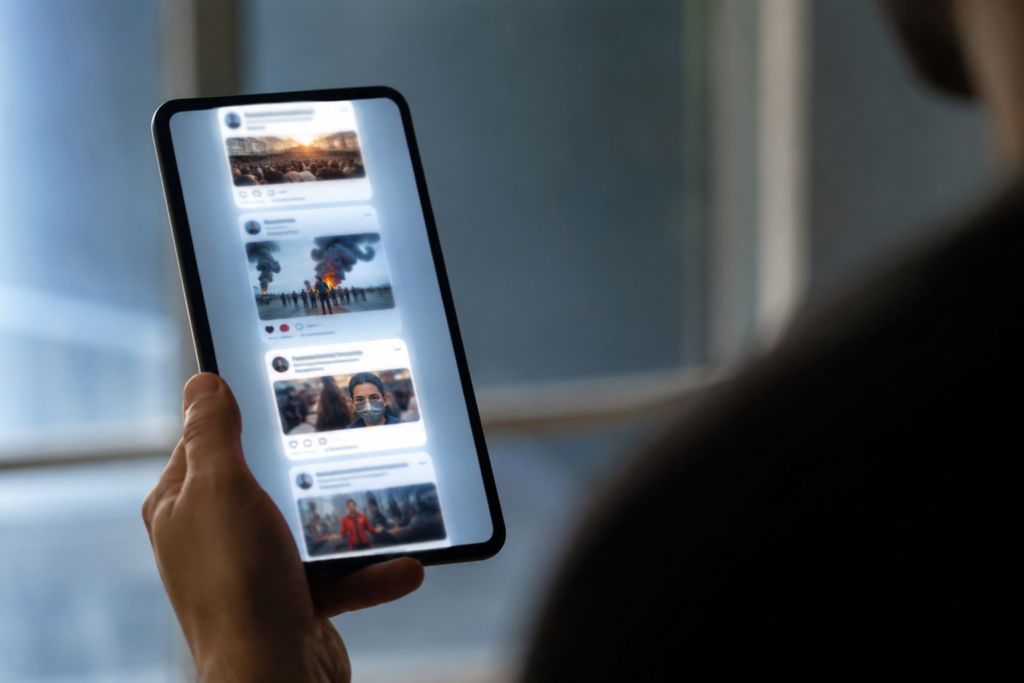
Platforms claim they’re neutral. They’re not. Every algorithm is a choice. Every recommendation is biased. Digital influence and politics work through three mechanisms: what content spreads, who sees it, and how they react to it.
First, algorithms amplify emotional content. Angry posts spread faster than thoughtful analysis. Outrage generates engagement. Platforms prioritize engagement. Therefore, platforms amplify outrage. Political division becomes profitable.
Second, targeted advertising reaches specific voters with specific messages. A 45-year-old conservative in Ohio sees different political content than a 25-year-old liberal in California. The same election. Different information universes. Voters never see opposing viewpoints with equal prominence. They live in algorithmic echo chambers.
Third, viral spread happens at unprecedented speed. A political rumor can reach 100 million people in hours. Fact-checking takes days. False information wins the race. Once beliefs form, they’re incredibly sticky. People rarely change their minds even when shown evidence.
This is how digital influence and politics works. Not through conspiracy. Through algorithm design.
Why TikTok Became a Political Threat
TikTok’s algorithm is the most sophisticated on Earth. It learns in real-time. One video you watch slightly influences the next. Watch 100 videos on a topic, and you’re trapped in that world entirely. The algorithm knows your beliefs, your fears, your vulnerabilities.
Politicians discovered this. They use TikTok to reach young voters directly. Campaigns create videos designed to trigger outrage or excitement. Videos get algorithmic amplification. Millions of young people see them. Their votes shift.
But there’s a deeper threat: China owns TikTok. The Chinese government can access user data. It can manipulate content. It can influence American politics to serve Chinese interests. This isn’t paranoia congressional testimony confirms it.
TikTok’s algorithm is so powerful that Congress moved to ban it. The platform shapes beliefs more effectively than traditional media. Television required editorial approval. TikTok bypasses that entirely. One creator reaches more people than CNN.
Algorithms That Shape What You See

Algorithms aren’t intelligent. They’re simple: maximize engagement. Posts that make you angry, sad, excited, or envious get amplified. Posts that bore you get buried.
Political content is engagement gold. Outrage spreads. Division spreads. Nuance doesn’t spread. The algorithm learns this and shows you more outrage, more division, more extremes.
This creates algorithmic radicalization. A normal person watches one political video. The algorithm suggests similar content. Watch 100, and you’re an activist. Watch 1,000, and you’re extremist. The algorithm nudges you incrementally toward the edges.
Platforms don’t do this maliciously (mostly). They simply optimize for engagement. The result? Democratic polarization. Voters increasingly hate the other side. They consume media from the same ideological bubble. They believe different facts about the same reality.
Data Collection and Voter Targeting
Every click, like, share, and search tells platforms who you are. They build a profile: your age, location, income, interests, anxieties, aspirations, political leanings.
Political campaigns buy access to this data. They create voter profiles. Then they target you with messages designed to change your behavior. The messages exploit your specific vulnerabilities.
Worried about immigration? You see ads about border crisis. Concerned about healthcare? You see ads questioning opposing plans. Interested in climate change? You see ads praising or attacking climate policy depending on who’s buying the ad.
This isn’t uniform messaging. It’s surgical targeting. Digital influence and politics means different people get different facts about the same election. They make decisions based on different information. The person paying for ads controls the narrative.
Cambridge Analytica proved this works. They created psychological profiles of millions of voters. They targeted them with psychologically precise messages. They swung elections. When exposed, the company shut down. But the capability didn’t disappear. It evolved.
The Data Behind Political Influence Online
Data is power. Whoever understands voter psychology wins elections.
Platforms collect staggering amounts of data. They know your location history (through phones), your interests (through clicks), your relationships (through connections), your values (through searches), your fears (through what you read when thinking no one’s watching).
This data creates predictive models. Platforms can predict which candidate you’ll vote for before you decide. They know how to change your mind. They know which lies you’ll believe and which truths you’ll reject.
Political campaigns exploit this. They spend billions on digital advertising because it works. Traditional TV ads reach everyone equally. Digital ads reach the exact person most likely to change their behavior based on that specific message. Efficiency is insane.
The result: digital influence and politics has shifted control toward whoever has the best data and the best targeting. Candidates with the biggest digital budgets don’t necessarily have the best ideas. They have the best algorithms.
Real Examples of Digital Influence Affecting Elections
The 2016 US Presidential Election was won partly through digital influence. Cambridge Analytica created voter profiles for millions of Americans. They micro-targeted them with customized political messages. Trump’s campaign utilized this capability. Election margins were razor-thin. Digital influence may have been decisive.
Brexit happened in 2016. The Leave campaign used social media to target ambivalent voters. Emotional messaging drove turnout. Digital platforms amplified Leave content more than Remain content. Digital influence shifted a nation.
India’s 2024 elections featured massive digital campaigns. Political parties targeted voters based on religion, caste, and regional identity. Algorithms showed different promises to different groups. Digital influence shaped the world’s largest democracy.
The 2020 US election saw even more sophisticated digital influence. Both campaigns invested billions in digital advertising. TikTok became a major battleground. Creators without official endorsements spread political messages. Algorithms amplified the most divisive content. Democratic institutions held (barely), but digital influence was unprecedented.
Ukraine’s Zelenskyy used digital platforms brilliantly. He created viral content. He spoke directly to citizens. He shifted global opinion toward supporting Ukraine. Digital influence and politics became weapons of information warfare.
Comparison: How Different Platforms Wield Digital Influence and Politics
| Platform | Reach | Algorithm Power | Data Collection | Political Use | Risk Level |
|---|---|---|---|---|---|
| TikTok | 1 billion+ young users | Extremely sophisticated | Extensive (China access) | Ultra-targeted campaigns | Very High |
| 3 billion users (all ages) | Highly targeted | Massive historical database | Broad demographic targeting | Very High | |
| 2 billion young/adult users | Visual algorithm tuning | Deep interest data | Influencer campaigns | High | |
| X (Twitter) | 500 million users (engaged) | Prioritizes conversation | Real-time interest tracking | News/narrative control | High |
| YouTube | 2.5 billion users | Watch history & recommendations | Behavioral data | Long-form propaganda | High |
| Telegram | 900 million users | Minimal algorithmic control | Limited | Direct messaging campaigns | Moderate |
Pros and Cons of Digital Influence in Political Campaigns
ProsConsReaches targeted voters efficientlySpreads misinformation at scaleEnables direct politician-voter connectionDeepens political polarizationAllows grassroots campaigns to scaleEnables foreign election interferenceReduces dependence on mainstream mediaCreates algorithmic filter bubbles
Pros (Detailed Bullets):
- Efficient Voter Reach: Political campaigns can reach persuadable voters with relevant messages. A climate campaign targets climate-concerned voters. This is more efficient than blanket TV ads. Campaigns use resources smarter.
- Direct Communication: Politicians speak directly to voters without media filters. They control their message. They build direct relationships. This democratizes politics—anyone with a phone can reach millions.
- Grassroots Movements Scale Faster: Small campaigns can become massive if content goes viral. Unpopular candidates can build movements. Digital platforms enable David vs. Goliath scenarios. Outsiders challenge establishment politicians effectively.
- Reduced Media Gatekeeping: Traditional TV required networks to approve content. Digital platforms bypass this. Marginal voices reach audiences. Alternative perspectives spread. Information monopolies weaken.
Cons (Detailed Bullets):
- Misinformation Spreads Uncontrolled: False information spreads faster than truth. Voters believe lies because algorithms amplified them. Election-related misinformation is widespread. Voters make decisions based on false facts. Democracy suffers when voters lack accurate information.
- Deepening Political Polarization: Algorithms show you content confirming your beliefs. People increasingly live in separate reality bubbles. They consume media from ideological sources. They stop understanding opposing viewpoints. Political hatred intensifies. Democratic compromise becomes impossible.
- Foreign Election Interference: Hostile nations manipulate elections through social media. Russia interfered in 2016. China influences US politics daily. Iran conducts influence operations. Small nations affect large democracies. Sovereignty is undermined.
- Algorithmic Filter Bubbles: Voters never see opposing arguments with equal prominence. A conservative sees conservative news. A liberal sees liberal news. They consume different facts about the same election. Elections become less about persuasion and more about mobilizing your side. Democracy weakens.
How to Recognize and Combat Digital Manipulation

You’re being targeted. Every day. Recognize it. Combat it. Your vote depends on it.
1. Assume Targeted Content If you see political content, assume it’s targeted to you specifically. Someone paid for it. They know your psychology. They crafted the message to influence you. Be skeptical. Question motives.
2. Check Sources Who created the content? Do they have credibility? Or are they unknown creators funded by dark money? Established news organizations have editorial standards. Random accounts don’t. If you can’t trace who’s behind the message, be suspicious.
3. Seek Opposing Viewpoints Read news from outlets you disagree with. Understand opposing arguments. Get out of your algorithmic bubble. Your beliefs will be challenged. This is healthy.
4. Verify Before Sharing Before sharing political content, verify it. Check multiple sources. Use fact-checking websites (Snopes, FactCheck.org, PolitiFact). Don’t amplify unverified claims. You become part of the manipulation infrastructure if you do.
5. Understand Emotional Triggers If content makes you extremely angry, sad, or afraid, pause. Emotional content is designed to bypass critical thinking. Algorithms amplify emotional content. Recognize when you’re being emotionally manipulated.
6. Diversify Information Sources Don’t get all your news from one platform. Don’t follow only creators you agree with. Read broadsheets. Listen to podcasts. Watch news from different countries. Expose yourself to different perspectives intentionally.
7. Research Platform Ownership Who owns the platform? What’s their incentive? TikTok is Chinese. Facebook is American. X is privately owned by Elon Musk. YouTube is Google. Understand who profits from your engagement. Understand geopolitical incentives.
Learn more about protecting your digital literacy at https://nextgendecode.in/

Conclusion
Digital influence and politics is the defining challenge of modern democracy. Platforms have more power over public opinion than traditional media ever did. Algorithms shape beliefs. Data enables surgical persuasion. Misinformation spreads faster than truth.
The implications are staggering. Elections can be swung. Societies can be polarized. Foreign governments can interfere. Citizens can be manipulated at scale.
But understanding this gives you power. Once you know algorithms are targeting you, you can resist. Once you understand data collection, you can limit it. Once you recognize manipulation, you can fight it.
One actionable insight: This week, check which political content appears in your feed. Ask yourself: “Who paid for this? Why was this shown to me specifically? Does this match my values, or is it manipulating my emotions?” Get in the habit of asking these questions. Spread this habit to your friends.
Democracy survives through informed citizens. Misinformation kills it. Your awareness is democracy’s defense. Protect it fiercely.
FAQ: Questions About Digital Influence and Politics Answered
How do algorithms decide what political content I see?
Algorithms prioritize engagement. They track what you watch, like, and click. They learn your interests and beliefs. They show you more similar content. If you watch conservative political content, the algorithm shows you more. You get trapped in an echo chamber. The algorithm learns you’re conservative and reinforces that identity continuously.
Can social media really swing elections?
Yes. Election margins are often narrow. Digital influence can be decisive. In 2016, Trump won Pennsylvania, Michigan, and Wisconsin by a combined 80,000 votes. Digital campaigns targeted persuadable voters in these states. Campaign effects matter at this scale. Most experts believe digital influence affected the outcome.
Is TikTok really a national security threat?
Yes, Congress believes so. TikTok’s algorithm is Chinese-controlled. China can access user data. China can manipulate content. This means a foreign government can influence American politics and national security. The algorithm’s power makes TikTok particularly dangerous. Threats are documented and serious.
How can I tell if political information is real or fake?
Check the source. Established news organizations have editors and fact-checkers. Unknown creators and accounts don’t. Verify with multiple sources. If only one source reports something, be suspicious. Use fact-checking websites. If your emotional reaction is extreme, the content is probably designed to manipulate. Trust your skepticism.
Why do platforms allow political misinformation?
Because it drives engagement. Misinformation makes people angry. Anger creates engagement. Engagement makes platforms money. They address the worst misinformation eventually, but truth travels slower than falsehoods. Platforms’ business model incentivizes misinformation. They could change this, but it would reduce engagement and revenue. They choose money.
What is algorithmic radicalization?
It’s when algorithms push users toward extreme content incrementally. You watch a moderate political video. The algorithm suggests more political content. Each suggestion is slightly more extreme than the last. After 100 videos, you’re consuming extremist content. The algorithm didn’t radicalize you maliciously—it just optimized for engagement. But the result is radicalization.