
Table of Contents
Why Gen Z Ethical Buying Behavior Matters for Brands
Your business depends on customer loyalty. That loyalty used to come from brand reputation, product quality, and advertising spend. Those factors still matter. But for Gen Z customers, something else matters more: ethics.
Gen Z ethical buying behavior has fundamentally shifted how commerce operates. This generation—people born between 1997 and 2012 spends $150 billion annually. Yet they make purchases based on completely different criteria than their parents’ generation.
Price matters less. Values matter more. Sustainability matters. Worker treatment matters. Social justice alignment matters. If your brand doesn’t reflect what Gen Z believes in, they’ll spend their money elsewhere.
This isn’t ideology. It’s business reality. Understanding Gen Z ethical buying behavior is survival for brands. For marketers, it’s opportunity. For young consumers, it’s power the ability to shape the brands you interact with daily.
This blog reveals six powerful insights about Gen Z ethical buying behavior that reshape how everyone should think about consumer spending.

The Psychology Behind Gen Z Ethical Buying Decisions
Understanding Gen Z ethical buying behavior requires understanding psychology. This generation grew up with climate change as background noise. School shootings became normal. Social media made global injustice visible in real-time. This shaped their worldview fundamentally.
For Gen Z, buying products from unethical companies feels complicit. When you know a brand uses sweatshop labor, buying from them feels like personally supporting exploitation. When you know a brand damages the environment, purchasing their products feels like you’re actively harming the planet. This psychological weight is real.
Sustainability as a Core Value
Sustainability isn’t an optional add-on for Gen Z. It’s foundational to identity. A 2023 study found 73% of Gen Z consumers actively seek sustainable products. This isn’t a niche. It’s mainstream.
But here’s the key insight: Gen Z doesn’t want brands patting themselves on the back for basic sustainability. They expect it. They want brands actually solving environmental problems not just using eco-friendly packaging while maintaining destructive supply chains.
This drives Gen Z ethical buying behavior toward transparency. If your sustainability claims are real, prove it. Show the data. Share the supply chain. Demonstrate impact.
Social Justice and Brand Accountability
Gen Z cares about brand values beyond just environment. Social justice alignment matters. Is your brand addressing racial equity? Are workers treated fairly? Does leadership reflect diversity?
When brands take political or social positions, Gen Z notices. When brands stay silent on issues Gen Z considers fundamental, that silence communicates values too often negative ones.
This creates complexity in Gen Z ethical buying behavior. Brands must navigate genuine values-alignment while appearing authentic, not performative. Gen Z has finely-tuned BS detectors. Performative activism gets called out instantly on social media.
How Gen Z Ethical Buying Behavior Differs from Older Generations
Gen Z ethical buying behavior shows clear generational differences:
Transparency Requirements
Older generations might trust brands because they’ve always done so. “Nike makes good shoes” feels like sufficient reasoning. Gen Z asks: “But how are they made? Who makes them? What are they paid? What environmental impact?”
This transparency demand isn’t optional. It’s baseline expectation. Gen Z ethical buying behavior assumes brands will prove their claims through specific data and verification, not just marketing language.
Digital Activism Influences Purchases
Gen Z lives online. When a brand stumbles whether ignoring environmental damage or responding poorly to social justice criticism Gen Z quickly shares that information via TikTok, Instagram, and Twitter. One viral video can tank a brand’s Gen Z reputation instantly.
This creates accountability mechanisms older generations never had. Your marketing message gets instantly fact-checked by millions of consumers comparing notes online. Gen Z ethical buying behavior means engaging with this reality, not fighting it.

Six Key Trends Shaping Gen Z Ethical Consumer Choices
Impact of Influencer Endorsements
Gen Z doesn’t trust traditional advertising. They trust authentic voices especially creators they follow on social media. An influencer’s endorsement of sustainable fashion carries weight. Their call-out of brand hypocrisy destroys trust instantly.
This changes how Gen Z ethical buying behavior develops. Product recommendations come from people they follow, not corporations. Brand reputation gets built through authentic creator partnerships, not paid advertising.
Price vs Values Conflict
Here’s where Gen Z ethical buying behavior gets complicated: Many Gen Z consumers struggle financially. Sustainable products often cost 20-50% more than conventional alternatives. This creates real conflict between values and budget.
Research shows Gen Z would prefer ethical brands but choose cheaper alternatives when finances force the decision. Understanding this tension helps brands solve it perhaps through accessible pricing for sustainable options, or payment plans making ethical choices financially viable.
Brands That Get Gen Z Ethical Buying Behavior Right
Some brands have figured out Gen Z psychology. They demonstrate this through actions, not just marketing:
Patagonia: Built entire business around environmental activism. Returns profit to environmental causes. Gen Z knows this is genuine, not performative. Result: fierce brand loyalty transcending price sensitivity.
Reformation: Fashion brand making sustainability transparent. Shows environmental impact of each garment. Gen Z respects this honesty even when impact isn’t perfect. They understand transformation takes time.
Allbirds: Sustainable footwear company founded explicitly on environmental values. Gen Z sees alignment between company mission and daily operations. This consistency drives loyalty.
Ben & Jerry’s: Decades-long social justice advocacy. Gen Z recognizes consistency across multiple justice issues. This builds trust that Gen Z ethical buying behavior rewards.
The pattern: Brands Gen Z trusts demonstrate values through concrete action, transparency, and consistency not slogans.
Consumer Value Expectations vs Reality: A Comparison
This comparison reveals the gap between what Gen Z expects and what most brands actually deliver.
| Expectation | Brand Reality | Gap |
|---|---|---|
| Full supply chain transparency | Most brands reveal 30-50% of supply chain | Major gap |
| Genuine environmental impact reduction | Many brands commit to 2050 net-zero targets | Credibility gap |
| Fair worker compensation | Minimum wage compliance, not living wages | Significant gap |
| Authentic social justice alignment | Surface-level diversity without systemic change | Trust gap |
| Continuous improvement and accountability | Stagnation after initial sustainability claims | Momentum gap |
Pros and Cons Table Format:
| Pros | Cons |
|---|---|
| Gen Z ethical buying behavior creates market incentive for genuine sustainability | Brands often greenwash, claiming sustainability without real impact |
| Young consumer demand accelerates corporate environmental accountability | Price premiums make ethical options inaccessible for lower-income Gen Z |
| Digital transparency makes brand claims instantly fact-checkable | Many brands still hide problematic supply chain practices |
| Social justice focus pushes systemic change in corporate culture | Performative activism without structural change wastes Gen Z trust |
Pros (Detailed Bullets):
- Accountability Creation: Gen Z ethical buying behavior creates financial consequences for unethical practices. Brands lose millions when exposed. This incentivizes genuine change, not just marketing improvements.
- Innovation Acceleration: Demand for sustainable alternatives drives R&D. Lab-grown materials, water-efficient manufacturing, and fair-wage production systems exist because Gen Z demanded them.
- Transparency Standards Emerge: What Gen Z demands becomes industry baseline. Five years ago, sustainability reports were rare. Now they’re expected. Gen Z ethical buying behavior raised the bar for everyone.
- Values-Driven Business Models: New brands built entirely around Gen Z values are outcompeting legacy companies. This proves that ethics-first business models work financially.
Cons (Detailed Bullets):
- Greenwashing Proliferation: Brands realize Gen Z cares about sustainability, so they fake it. Misleading environmental claims confuse consumers and undermine genuine efforts.
- Economic Accessibility Gap: Ethical products cost more. This creates situation where Gen Z values demand ethical consumption, but budgets force unethical choices. This internal conflict causes guilt.
- Supply Chain Complexity: Most brands can’t achieve full transparency due to international supply chain complexity. Gen Z expects perfect transparency; reality is messier and takes time.
- Performative vs Authentic Activism: Brands adopt social justice language without making systemic changes. Gen Z sees through this instantly. Performative activism damages trust more than silence.
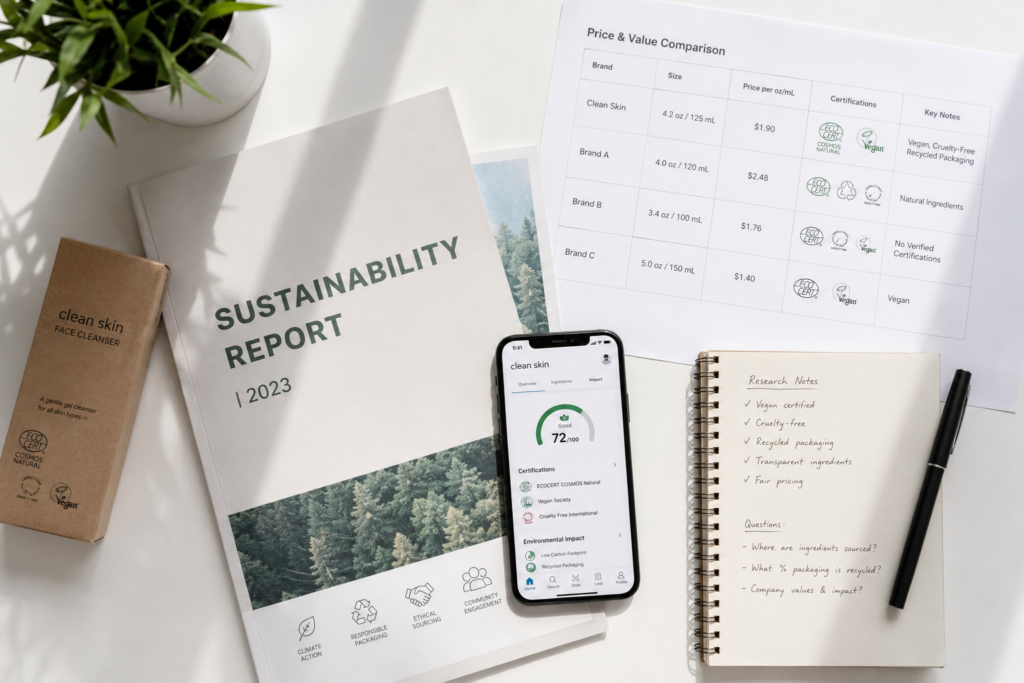
How Gen Z Makes Ethical Purchasing Decisions: Step-by-Step
Gen Z ethical buying behavior follows a specific research and decision process:
How to Research Brand Ethics
Step-by-step process Gen Z uses:
- Find Certifications: Look for verified labels like Fair Trade, GOTS (organic textiles), OEKO-TEX, or Certified B Corp. These indicate third-party verification, not just brand claims.
- Check Supply Chain Transparency: Visit brand websites. Do they clearly explain where products come from? Do they name specific suppliers? Vague answers indicate problems.
- Review Worker Conditions: Search “[Brand Name] labor practices” or “[Brand Name] worker treatment.” Independent reports reveal what brands hide in official statements.
- Assess Environmental Impact: Look for specific metrics: water usage reduction, carbon footprint, waste reduction. Vague sustainability language means nothing.
- Evaluate Leadership Diversity: Check team pages. Does leadership reflect the communities brands claim to serve? Diversity matters to Gen Z ethical buying behavior.
Where Gen Z Finds Ethical Information
Gen Z researches through specific trusted sources:
- Rating Websites: Good On You (fashion), Ethical Consumer (general products), Climate Impact Lab (carbon tracking)
- Creator Reviews: YouTubers and TikTokers specializing in ethical consumption research
- Reddit Communities: Subreddits dedicated to ethical shopping debate sustainability claims
- Brand Transparency Reports: Published by brands themselves (when they actually publish them)
- Friend Recommendations: Trusted peers sharing vetted brands they’ve personally researched
For additional research resources and guides: https://nextgendecode.in/

Conclusion
Gen Z ethical buying behavior represents fundamental shift in consumerism. This generation doesn’t accept empty corporate promises. They demand proof. They reward authenticity. They hold brands accountable through social media, research, and purchasing decisions.
For brands, ignoring Gen Z values means losing the demographic that will control consumer spending for the next three decades. For Gen Z consumers, understanding your own purchasing psychology empowers smarter decisions aligned with your values.
Here’s the truth: Gen Z ethical buying behavior isn’t phase. It’s permanent. The next generation (Gen Alpha) will care even more about ethics. Sustainability, transparency, and social justice aren’t optional brand characteristics anymore. They’re baseline requirements.
Brands adapting now gain competitive advantage. Brands ignoring Gen Z ethical buying behavior will fade as their customer base ages. The choice is yours evolve toward values-alignment, or become irrelevant to the generation reshaping commerce.
Your values. Your purchasing power. Your future. Gen Z ethical buying behavior proves that consumers can demand and create change.
FAQ: Common Questions About Gen Z Buying Psychology
1.Why does Gen Z care so much about brand ethics?
Growing up with climate change, social media activism, and visible global injustice shaped Gen Z worldview. Buying from unethical companies feels complicit. This generation views consumption as active participation in either positive or negative systems. Ethical choices feel like personal responsibility, not just preference.
2.Will Gen Z pay premium prices for ethical products?
Sometimes, but not always. Research shows 68% of Gen Z would buy ethical products if they matched conventional pricing. Price premiums create real barriers despite strong values. Sustainable fashion showing success by reducing price gaps proves this matters. Gen Z values ethics, but budgets matter too.
3.Do brands actually need to be perfect to earn Gen Z loyalty?
No. Gen Z ethical buying behavior rewards progress, not perfection. Brands showing genuine improvement, transparency about challenges, and commitment to continuous change earn loyalty. What doesn’t work: claiming perfection, hiding problems, or staying silent on issues Gen Z considers fundamental.
4.How quickly does Gen Z abandon brands for ethical violations?
Incredibly fast. One viral TikTok exposing brand hypocrisy can tank reputation overnight. Gen Z information-sharing is instant and powerful. However, transparency about violations and genuine commitment to change can restore trust. Brands ignoring problems accelerate the fall.
5.Can smaller brands compete with established ones in capturing Gen Z loyalty?
Yes. Smaller brands often win Gen Z trust because they’re built explicitly around values. Lower marketing budgets get offset by authentic founder stories and direct consumer relationships. Gen Z prefers supporting small ethical businesses over large corporations with questionable practices.