

Introduction
Think about the last time you walked into a Starbucks. Did you go just for coffee? Probably not. You went for the feeling the warm music, the smell of freshly ground beans, the freedom to sit for an hour without anyone rushing you out. That feeling is not an accident. It is the result of one of the most powerful brand ideas in modern business: the Starbucks third place strategy.
This strategy turns ordinary coffee shops into lifestyle destinations. It is why Starbucks is not competing on price. It is competing on experience. In this post, you will learn the 8 smart secrets that make this strategy so effective and how any brand can learn from it.
What Is the Starbucks Third Place Strategy?
The Origin of the Third Place Idea
Sociologist Ray Oldenburg introduced the “third place” concept in his 1989 book. He argued that beyond home (first place) and work (second place), people need a third comfortable social space. Howard Schultz, former Starbucks CEO, read this idea and built an entire global brand around it.
The Starbucks third place strategy positions every store as that middle ground relaxed, welcoming, and free from pressure. You can stay for five minutes or five hours. No one minds. That freedom is the product.
According to Wikipedia’s entry on Starbucks, the company now operates over 35,000 locations worldwide. That scale is only possible because the strategy creates consistent emotional value across every single store.
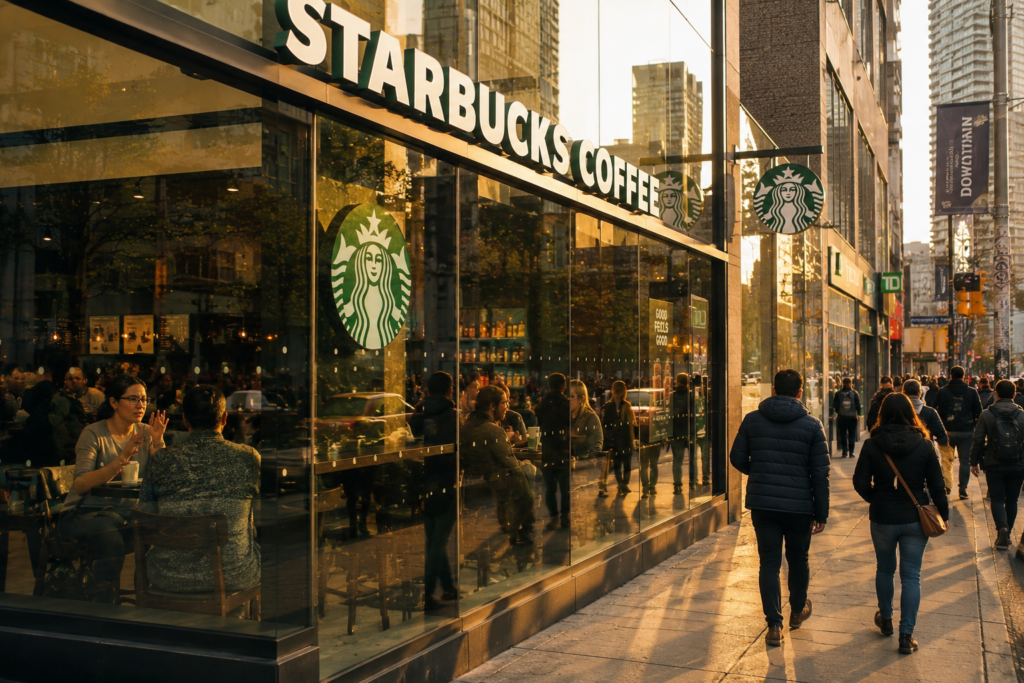
8 Smart Pillars of the Starbucks Third Place Strategy
Sensory Design That Invites You to Stay
Every detail inside a Starbucks store is intentional. The earthy tones, warm lighting, comfortable seating, and carefully curated playlists all signal one thing: relax, you belong here. This sensory environment is not décor it is a strategic brand tool.
Consistent Yet Personalised Experience
Starbucks lets you customise almost every drink. Your name on the cup makes it personal. But walk into any store globally and the layout, the colours, and the vibe feel the same. This balance of personal and predictable is rare and it builds deep trust.
The Starbucks Third Place Strategy in Digital Spaces
The brand extended its third place idea into digital life. The Starbucks Rewards app is not just a loyalty programme it is a digital version of belonging. Members feel part of a community, earning rewards and getting early access to seasonal items.
Community as a Marketing Tool
Starbucks actively supports local events, diverse hiring, and social causes. This makes customers feel their money goes somewhere meaningful. When people feel connected to a brand’s values, they stop being buyers and start being advocates.
Premium Pricing Backed by Perceived Value
A Starbucks coffee costs two to four times more than a basic café option. Yet people pay without hesitation. Why? Because they are not buying just coffee. They are buying a comfortable space, a personalised experience, and a social signal. The price feels fair when the perceived value is high.
Seasonal Campaigns That Create FOMO
The Pumpkin Spice Latte is more than a drink it is a cultural event. Limited seasonal items create genuine excitement and urgency. Customers plan visits around seasonal launches. That is brilliant lifestyle marketing in action.
Staff as Brand Ambassadors
Starbucks calls its employees ‘partners’, not staff. They receive significant training in customer experience, not just coffee-making. A warm, first-name greeting costs nothing but builds emotional loyalty that no ad campaign can buy.
Storytelling Through Every Touchpoint
From the sleeve on your cup to the seasonal packaging, every touchpoint tells a consistent story. Forbes has noted that Starbucks consistently ranks among the world’s most valuable brands partly because of this storytelling discipline. The brand does not just sell coffee it sells a narrative.
Comparison: Starbucks vs Competitors on Third Place Elements
Feature | Starbucks | McDonald’s McCafe | Local Coffee Shop | Dunkin’ |
Ambience Design | Intentional & warm | Functional | Varies | Minimal |
Personalisation | High (name + customisation) | Low | Medium | Low |
Loyalty App | Advanced (Rewards) | Basic | Rare | Basic |
Third Place Feel | Strong | Weak | Strong | Weak |
Seasonal Campaigns | Major cultural events | Occasional | Rare | Moderate |
Premium Pricing | Yes | No | Sometimes | No |
Community Focus | High | Low | High | Low |
Staff Experience Training | Extensive | Basic | Varies | Basic |

Pros and Cons of the Starbucks Lifestyle Model
Pros
- Builds deep emotional loyalty that goes far beyond product quality
- Justifies premium pricing through perceived lifestyle value
- Creates consistent brand experience across thousands of global locations
- Seasonal campaigns generate organic social media buzz
- The loyalty app drives repeat visits and increases average spend
- Staff training creates human connections that competitors cannot easily copy
Cons
- High operational cost to maintain premium store design and staff training
- Over-expansion risk can dilute the exclusive third place feel
- Growing competition from specialty coffee brands targeting the same audience
- Customisation options can slow service speed during peak hours
- Premium pricing excludes price-sensitive customer segments
How to Apply the Third Place Strategy to Your Own Brand
You do not need 35,000 locations to use this strategy. Here is how to start today:
- Define your ‘third place’ clearly. What comfortable middle ground does your brand offer between two other options in your customer’s life?
- Invest in sensory experience. Whether it is your website, store, or packaging make the environment feel welcoming and intentional.
- Personalise at scale. Use customer names, tailored recommendations, or loyalty tiers to make every interaction feel personal.
- Build seasonal moments. Create limited campaigns that make customers feel part of something timely and exclusive.
- Train your team on emotional connection. Scripts matter less than genuine warmth.
- Use digital loyalty tools. Even a simple rewards programme on an app can replicate the sense of belonging.
For more brand strategy breakdowns and marketing insights, visit NextGenDecode.in your go-to resource for smart business thinking.

Conclusion
Starbucks does not sell coffee. It sells a feeling the warmth of belonging somewhere between home and work. The Starbucks third place strategy is a masterclass in how powerful brands are built on emotion, not just product.
The biggest takeaway here is this: customers pay a premium when they feel they belong. Design your brand around that feeling, and price becomes a secondary conversation.
Whether you run a café, a consultancy, or an e-commerce store ask yourself: What third place does my brand offer? The answer could redefine your entire business.
FAQ: Starbucks Third Place Strategy
What exactly is the Starbucks third place concept?
The Starbucks third place strategy refers to positioning Starbucks stores as a comfortable social space between home and work. The concept was inspired by sociologist Ray Oldenburg’s idea that people need a welcoming third environment outside of their two primary spaces.
Does the third place strategy still work today?
Yes, though it has evolved. Today, Starbucks extends the third place idea into digital spaces through its Rewards app and social media communities. The emotional core belonging and comfort remains as relevant as ever, even in an increasingly remote-work world.
How does Starbucks use design to sell lifestyle?
Every element of store design from warm lighting and natural materials to background music and seating layout is intentionally crafted to create a relaxed, aspirational atmosphere. This design language signals ‘stay awhile’, which increases both time spent and money spent.
Can small businesses use the third place strategy?
Absolutely. Small businesses can apply this by focusing on creating a specific emotional feeling, training staff on genuine connection, personalising interactions, and designing their physical or digital space intentionally. Scale is not required intention is.